Resetting healthy habits now can make a big impact later
In this article
Establishing healthy habits now can make busy seasons easier — but only if they still work when life gets full. As summer winds down, bedtimes drift later, meals get less consistent, workouts get pushed around, and routine care gets easy to put off. Then work, school, and packed calendars come back fast, and suddenly the small things that felt flexible in summer start making everyday life feel harder. And those summer health tips you were following don’t always transfer seamlessly into busier schedules.
That’s usually when the question hits: what should you reset first? This doctor-advised guide focuses on five healthy habits that can help you feel steadier when routines get busy again: sleep, eating patterns, movement, mental health support, and preventive care. With guidance from Dr. Brian Knox, Included Health’s Clinical Affairs Medical Director, we’ll break down what matters most, how to make each habit realistic, and when healthy habits alone aren’t enough.

What are healthy habits?
Healthy habits are repeatable behaviors that support physical and mental health over time. They’re the daily habits that help you sleep better, eat more regularly, move your body, manage stress, and stay on top of routine care. In other words, healthy habits aren’t about doing everything perfectly. They’re about creating routines that support good health consistently.
The most useful health habits are the ones that hold up when life gets busy. A healthy lifestyle shouldn’t be built on the standard of one ideal day. It’s built on small patterns you can return to during rushed mornings, crowded weeks, and seasons when your schedule changes fast.
If you’ve ever wondered what healthy habits are, how to be healthy, or how to build good habits that last, the answer is usually less complicated than you may expect: start with routines that lower friction instead of adding more pressure.
That’s what the five habits below are designed to do. They’re practical examples of good habits that help you function better, not just look healthier on paper.

5 healthy habits to reset now
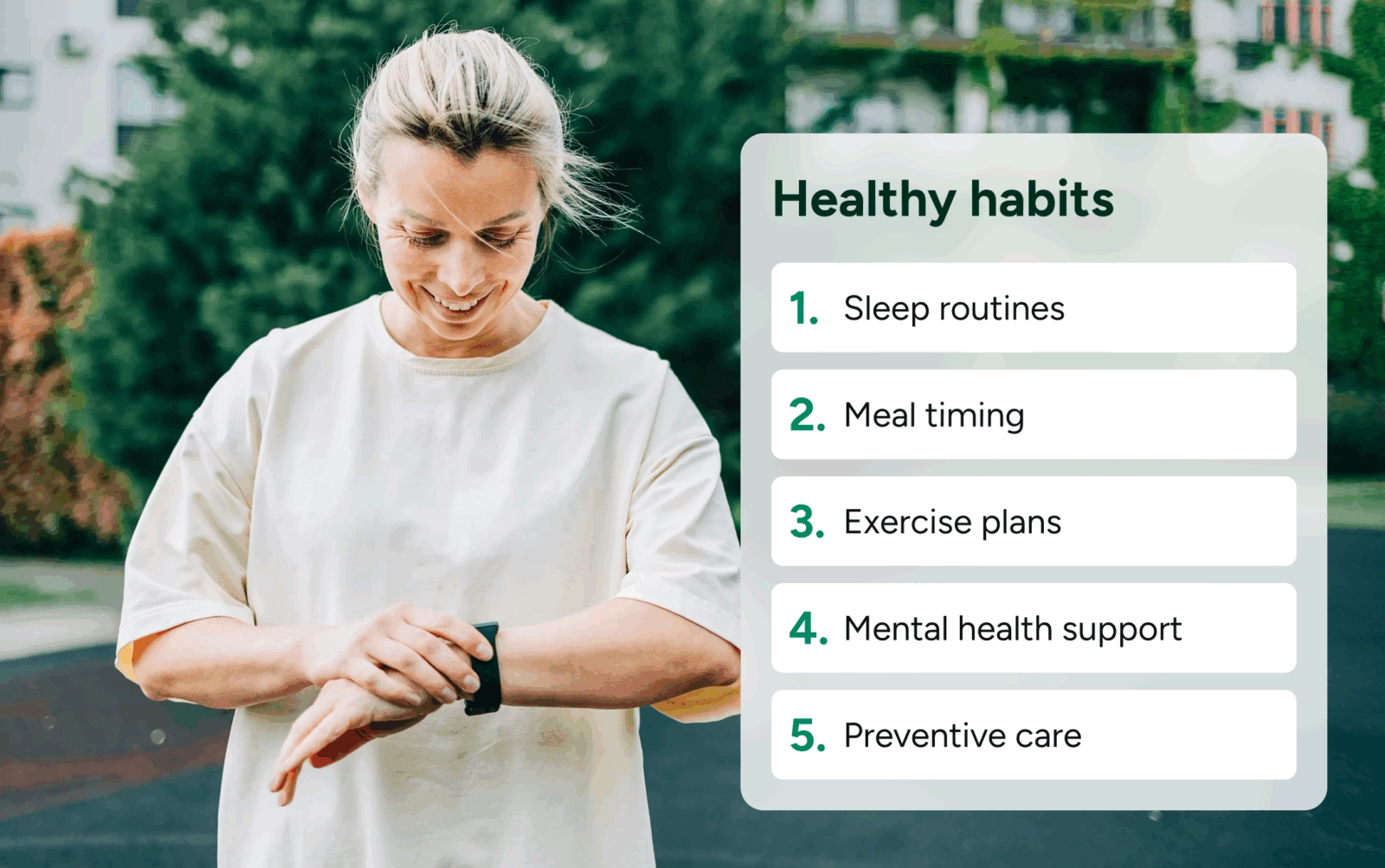
The best healthy habits aren’t always the most ambitious ones. They’re the ones that make your week easier to manage. These five habits support energy, mood, focus, and resilience in ways that help a healthy lifestyle feel more doable when routines tighten up.
1. Reset your sleep before routine resets you
According to Dr. Knox, starting with your sleep routine is the first — and most important — step in establishing healthy habits that hold up in even the busiest moments. And that’s because it can take the longest. “You can’t just restore a sleep cycle that matches your school or work routine immediately. Your body just won’t do it,” he shares. That’s why sleep is such an important place to start.
What to do
- Re-establish a consistent sleep and wake time. Even a rough target helps your body start adjusting to a more predictable rhythm.
- Shift bedtime gradually instead of trying to “fix” it overnight. Moving your schedule in steps is easier on your body than forcing a sudden reset.
- Reduce late-night drift, especially if summer sleep became inconsistent. Earlier mornings feel less brutal when bedtime stops sliding later and later.
- Build a simple wind-down routine that signals bedtime. A short routine like dimming lights, putting your phone down, or showering at the same time can help cue sleep.
Why it matters
- Sleep is often the first habit to drift and one of the first to affect energy, mood, focus, and stress tolerance. When sleep gets thrown off, the rest of your health habits usually get harder too.
- Poor sleep can make everything else feel harder. It gets tougher to keep healthy habits around food, movement, patience, and mental resilience when you’re running on less rest.
How to make it realistic
- Move wake time and bedtime gradually over the course of a few weeks. That gives your body time to adjust instead of fighting the change. Dr. Knox suggests shifting your sleep and wake times in one-hour increments starting a few weeks before your typical routine begins.
- Focus on consistency, not perfection. A mostly steady schedule is more useful than a perfect one you can’t keep.
- Start with a wake time if that’s easier. If you’re trying to adopt healthy sleep habits, anchoring your morning can be a practical first step.
2. Make meal timing work for your regular routine
Summer can impact more than your bedtime — it also tends to throw off when you eat. As Dr. Knox notes, “It’s important to adjust your breakfast, lunch, and dinner schedule, along with when you have your snacks, to ensure your body has adequate nutrition and is ready for the upcoming daily demands.”
What to do
- Reset breakfast, lunch, dinner, and snack timing before routines tighten up. Your body handles busy days better when it’s used to a steadier schedule.
- Think about meal timing, not just meal quality. What you eat matters, but so does when you eat.
- Avoid waiting until your first busy week to realize your body is off schedule. That’s when skipped meals and low energy tend to show up.
- Build one or two easy go-to meals for mornings or packed days. A simple default helps healthy eating habits survive rushed days.
Why it matters
- Busy seasons feel harder when eating patterns are inconsistent. Irregular meals can make energy and concentration feel less stable.
- Waiting too long to eat, skipping breakfast, or relying on convenience foods can affect your energy, concentration, and mood. That’s one reason why developing healthy eating habits is about rhythm as much as ingredients.
- Healthy eating habits are easier to maintain when your body is used to a certain routine. Regularity makes healthy habits feel less like a constant adjustment.
How to make it realistic
- Adjust your meal times gradually. Your appetite often needs time to catch up with a new schedule.
- Prepare simple defaults instead of aiming for perfect meal prep. A repeatable breakfast or lunch is often more useful than an elaborate system.
- Focus on regularity first, optimization second. If you’re wondering how to create healthy habits around food, consistency is usually the better first goal.
3. Build an exercise plan that matches real-life demands
“Exercise is really important for health,” Dr. Knox shares, “and it’s one of the things that gets easy to push off if you don’t build it into your routine.” That means this habit is less about finding the perfect workout plan and more about establishing a realistic one.
What to do
- Decide when movement actually fits your day before the week fills up. It’s easier to protect time for movement when you choose it in advance.
- Pick a time that matches your real behaviors, not your ideal self. A plan that ignores your real schedule usually disappears fast.
- Build movement into the day in a way that feels realistic enough to repeat. Short walks, shorter workouts, and flexible activities still count.
- Consider short, consistent activity over all-or-nothing workouts. This is often the difference between sustainable good habits and abandoned plans.
Why it matters
- Exercise is one of the first habits people push aside when schedules fill up. That doesn’t mean it stopped mattering. It usually means the plan wasn’t realistic enough.
- Regular movement supports energy, sleep, stress relief, and physical health. It’s one of the clearest ways health habits support a healthy lifestyle.
- A realistic routine is better than an ambitious one that disappears after a week. Good health isn’t built on ideal weeks only.
How to make it realistic
- Plan around your actual life constraints. Work, caregiving, commuting, and energy levels all matter.
- Choose a version of exercise you can sustain. A moderate plan you repeat is better than a perfect plan you resent.
- Accept that some weeks will be messy. The goal isn’t a perfect streak. It’s returning to the habit quickly.
4. Make mental health support part of your health plan
Mental health isn’t separate from the rest of your routine. In fact, as Dr. Knox notes, “Mental health should be core to the way that you think about your health.” That’s why prioritizing your mental health is one of the healthiest habits you can focus on before your schedule fills up.
What to do
- Pay attention to changes in sleep, mood, energy, irritability, headaches, stomach symptoms, or simply feeling “off.” Mental strain often shows up in subtle ways first. And it can often be connected to other physical causes. You can watch for patterns between your physical and mental health and discuss whether there’s a link, like the connection between hormones and mental health.
- Build in time for connection, recovery, and things that keep life from becoming all work. A healthy lifestyle needs breathing room, not just productivity.
- Consider a therapist or PCP check-in sooner rather than waiting for things to get severe. You don’t need to wait for a breaking point.
- Don’t delay asking for help if you’re already thinking about it. Dr. Knox’s advice is to follow your intuition: “I’d set a low bar on gauging when to get care. If you are thinking about seeking mental health support, you probably should just do it.”
Why it matters
- Busy seasons don’t just affect schedules. They also affect stress tolerance, mood, patience, and mental resilience. Not sure if you’re stressed or on the verge of a burnout? Learn the difference in our article on stress vs. burnout.
- Mental health strain often shows up as physical symptoms or subtle changes in daily functioning. That can look like headaches, stomach issues, sleep changes, or irritability.
- Healthy habits support mental health, but they don’t replace help when stress or anxiety begins to affect daily life. That’s where earlier support can make a real difference.
How to make it realistic
- Look for patterns, not just dramatic symptoms. Repeated changes matter even if they don’t look severe.
- Use one trusted friend or family member as a reality check if you’re not sure how you’re doing. It can be hard to be objective about yourself.
- Think of mental health the same way you think of physical health. It’s worth checking on regularly, not just in crisis.
5. Don’t let preventive care get pushed aside
This habit tends to get delayed precisely because nothing feels urgent yet. As Dr. Knox explains, “Because you don’t have symptoms, it’s really easy to brush that aside when your schedule gets busy. But if you know about it earlier, you can intervene and keep it from being a bigger problem.”
What to do
- Book routine care before your schedule gets tighter. Preventive care is easier to keep when it’s already on the calendar.
- Use annual visits, screenings, medication check-ins, and preventive questions as a way to stay ahead. Routine care is one of the most practical health habits you can protect.
- Treat new but mild symptoms differently from your usual baseline. Newness matters, not just severity.
- If something’s new or unusual for you, ask your doctor about it sooner rather than waiting for it to possibly get worse. A lower threshold for asking can prevent more stress later. Talking with your primary care provider can provide the insight you need along with guidance on the right next steps.
Why it matters
- Preventive care is easy to delay because there may be no symptoms yet. That’s also why it’s so easy to underestimate.
- Early detection and early conversations can prevent bigger disruptions later. That applies to everyday issues, not just major diagnoses.
- Small or new symptoms are often the easiest to brush aside when life is busy, but they can quickly snowball. Mild doesn’t always mean unimportant.
How to make it realistic
- Put routine care on the calendar before the season gets chaotic. The earlier you schedule it, the easier it is to keep.
- Use virtual options and expanded-hours care when fitting in care feels hard. That can make preventive and early-action care much easier to follow through on.
- If you’re unsure whether something needs attention, lower the threshold for asking. When healthy habits aren’t enough, asking sooner is often the simpler move. You can also review this guide on preventive care by age for a head start.

What a doctor would do:
Tips from Dr. Knox
If you want a back-to-routine reset that actually works, Dr. Knox recommends focusing on the changes that are most likely to drift first.
If your summer routine drifted
- Reset your sleep and wake time gradually. Give yourself a couple of weeks instead of trying to flip the schedule overnight.
- Adjust meal timing before your busiest week starts. That helps your body get used to an earlier, more structured day.
- Think ahead about where exercise fits. Choose the time that matches your real routine, not the one that sounds best in theory.
If you know your life gets busy fast
- Take care of routine medical needs earlier. Physicals, vaccines, medication check-ins, and preventive questions are easier to handle before your calendar gets packed.
- Plan for balance, not just productivity. Sleep, movement, and social connection are all part of health.
- Be realistic about what you can actually sustain. A balanced plan works better than one extreme habit that throws everything else off.
If stress or anxiety are already showing up
- Watch for functional changes. Sleep disruption, irritability, fatigue, headaches, stomach symptoms, or withdrawing from things you normally do can all matter.
- Think of mental health the way you think of physical health. A check-in can be appropriate before things feel severe.
- Keep your threshold low for asking for help. If it’s already on your mind, it may be worth acting on.

How to build healthy habits that actually stick
If you want to know how to build healthy habits, how to create healthy habits, or how to maintain healthy habits, the answer usually isn’t to overhaul your whole life at once. It’s to start with one change, make it repeatable, and give it enough structure to survive a hard week. That’s also how to build good habits and how to create good habits that last.
Use this approach:
- Start with one habit at a time, not all at once. Sleep is often the best first reset because it supports so many other daily habits.
- Attach habits to a routine that already exists. Habits are easier to keep when they ride on something familiar.
- Adjust gradually instead of overhauling everything. This is one of the clearest answers to how to build good habits in real life.
- Make habits easy enough to repeat on hard days. Your hardest days are part of the plan, not exceptions to it.
- Focus on consistency more than intensity. Health habits work best when you can come back to them.
- Rebuild quickly after disruptions instead of waiting for a perfect time to restart. One “off” day doesn’t erase progress.

When healthy habits aren’t enough
Healthy habits support good health, but they aren’t a substitute for care when something’s unusual, persistent, or getting worse. New symptoms deserve more attention than familiar ones. Mild symptoms that last longer than expected, get more severe, or begin to affect your day are worth checking on.
The same is true for mental health. Preventive care and mental health check-ins still matter even when nothing feels dramatic. If stress, anxiety, sleep problems, fatigue, mood changes, or physical symptoms are starting to affect your functioning, it may be time to talk with someone.
Virtual care can make it easier to ask sooner rather than later. Depending on the issue, urgent care, primary care, or mental health support may all have a role. If you’re not sure what to expect from that process, learn more about how an online doctor visit works.

The next step toward a healthier routine
Healthy habits should make your life easier, not more complicated. The goal isn’t to turn your routine into a full-time project. It’s to choose the few habits that help you feel steadier when your days get fuller.
Start with one habit this week, ideally sleep. Then choose one piece of care to stop putting off, whether that’s a preventive visit, a primary care question, or a mental health check-in. If you need help building a routine that works in real life, support is available.
Book a visit if you want help with a routine health question, a preventive check-in, stress that’s starting to affect daily life, or symptoms you’re not sure you should keep brushing aside.
About the authors

Quan Lam is a copywriter with over 15 years of experience writing and editing content for both start-ups and legacy brands, as well as 2 years of writing experience exclusively within the healthcare space. She currently lives and works in New York City.

Dr. Brian Knox is board-certified in Internal Medicine and Pediatrics, and has been overseeing clinical services at Included Health for the past 3 years. Prior to joining IH 6 years ago, Dr. Knox spent 9+ years providing primary care to adults and children. He has expertise in preventive care, primary care for the LGBTQ+ population, as well as the management of patients with difficult-to-control diabetes and hypertension.