Get care wherever your travels take you
In this article
Summer health tips can make or break how quickly you bounce back when something doesn’t feel right. A sunburn that turns angry by evening, a stomach bug mid-vacation, a bug bite that just won’t settle — warm-weather health issues often start small but can derail your plans fast if you don’t know how to respond.
In those unexpected moments, you’re probably asking: Is this something I can handle on my own, or should I talk to a doctor? These summer health tips and summer safety tips are built around practical, doctor-informed guidance on what to watch for, what to do first, and when virtual care is a smart first step. The goal is simple: get quick answers so you can get back to the summer you planned.
4 summer health tips to help you stay ahead
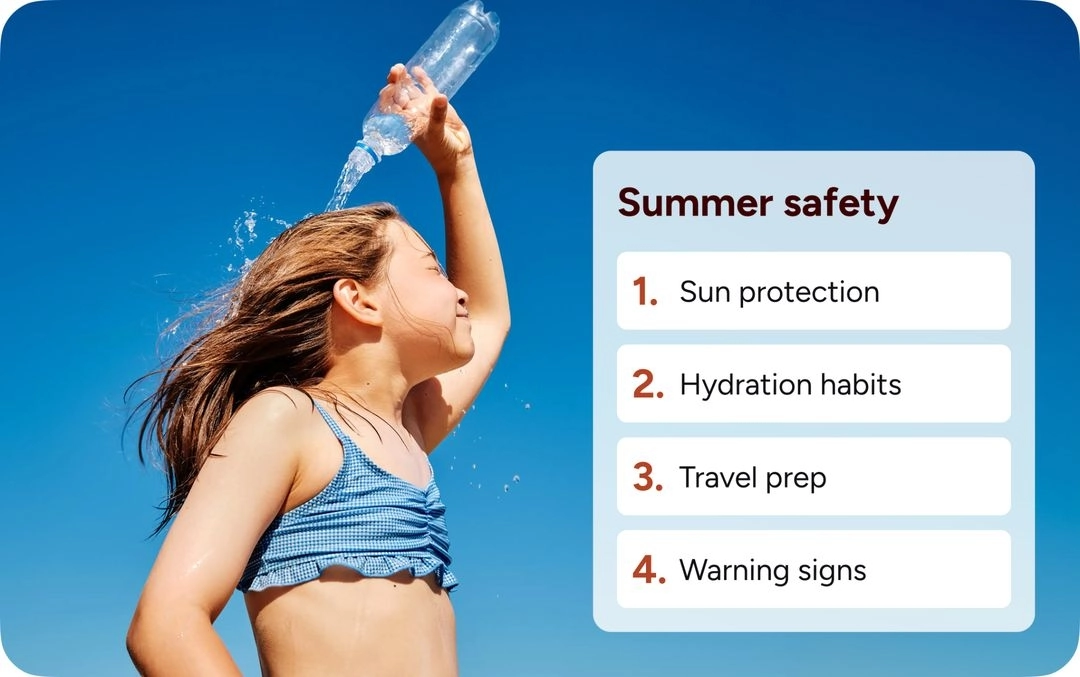
The best summer safety tips start before anything goes wrong. Being proactive about summer health gives you a real advantage against the most common warm-weather problems. For more on protecting your skin all season long, these summer skincare tips are worth a read before your next day outside.
1. Protect your skin from sun damage
What to do
- Use SPF 30+ sunscreen. Apply broad-spectrum SPF 30 or higher to all exposed skin about 15 minutes before heading outside. Most people apply far less than they need — use more than feels necessary, and cover commonly missed spots like the ears and the back of the neck.
- Reapply as directed. Reapply at least every two hours, and immediately after swimming or heavy sweating. Water-resistant doesn’t mean waterproof, and sunscreen breaks down with time and heat.
- Wear hats and protective clothing. A wide-brimmed hat protects your face, neck, and ears. Lightweight UPF-rated clothing adds meaningful coverage when you’re spending extended time outdoors during peak UV hours.
- Don’t skip sunscreen on cloudy days. Up to 80% of UV rays still reach your skin through cloud cover. As Doctor On Demand
 ® provider Dr. Heather Hockenberry explains, “People think on a cloudy day, ‘I don’t need sunscreen,’ or ‘I’m only going to be out for a little while.’ But the thing is it adds up over our lifetimes.”
Why it matters
Sun damage accumulates over years, not just one bad afternoon. A severe sunburn goes well beyond redness. It can bring blistering, chills, fever, and a whole-body inflammatory response.
2. Hydrate early and take plenty of water with you
What to do
- Hydrate before spending time outdoors. Thirst is a late signal — your body is already running a deficit by the time you feel it. Drink consistently in the hours leading up to any outdoor activity, not just while you’re in the middle of it.
- Bring extra water for hikes, park days, sports, and travel. You’ll need more than you expect, especially in humidity and direct heat. Remind kids to drink regularly — they rarely pause on their own to hydrate.
- Consider when electrolyte support can help. For extended outdoor activity with heavy sweating, an electrolyte drink or tablet helps replace what plain water alone can’t. This matters most during long days outside or when you’re physically active in the heat.
Why it matters
Heat-related illness escalates faster than most people expect. How much water do you need in hot weather? A practical target is at least 8 ounces every 20 minutes during strenuous activity in the heat and more in humid conditions. Waiting until you feel drained is often too late to prevent things from worsening.

3. Prep for summer travel and outdoor time
What to do
- Pack medications and basic supplies. Before any trip, double check what you might need: regular prescriptions, antihistamines, a rescue inhaler if you have asthma, pain relief, and basic first aid. Don’t count on finding exactly what you need at your destination.
- Think ahead about allergens in new places. New environments bring different pollen, mold, dust, and air quality. If you have seasonal allergies or asthma, research your destination and check in with your doctor before you travel.
- Know where to start if you need care. One of the most practical summer safety tips for travelers is activating your Doctor On Demand account before you leave. With Doctor On Demand, you can connect with a board-certified physician from wherever you are. There’s no need to find urgent care in an unfamiliar city while you’re not feeling well.
- Don’t skip sunscreen on cloudy days. This is especially true at higher altitudes, near water, or at beach destinations where UV exposure is considerably more intense than you may expect.
Why it matters
Travel and routine changes can make it hard to get care. When you’re somewhere unfamiliar and don’t feel well, not knowing where to turn adds stress to an already difficult situation.

4. Know your body’s first warning signs
What to do
- Pay attention to thirst, overheating, fatigue, and mild discomfort. These are early warning signs that your body needs a break. Feeling unusually hot, drained, dizzy, or nauseated after time outdoors is your cue to stop, find shade, and hydrate before symptoms have a chance to progress. As Dr. Hockenberry explains: “At that point, your body’s telling you, ‘Hey, I need water. I need shade. I need to cool down.’ But if you don’t catch it then, it can go beyond these early warning signs.”
- Pause activity before symptoms escalate. Pushing through early heat symptoms is one of the most common summer safety mistakes people make. Stop what you’re doing, get to a cooler space, and take a moment to check in on how you’re feeling.
Why it matters
Mild heat symptoms can progress quickly if you ignore them. Children can get worse faster than adults, so it’s important to spot warning signs early and act right away.


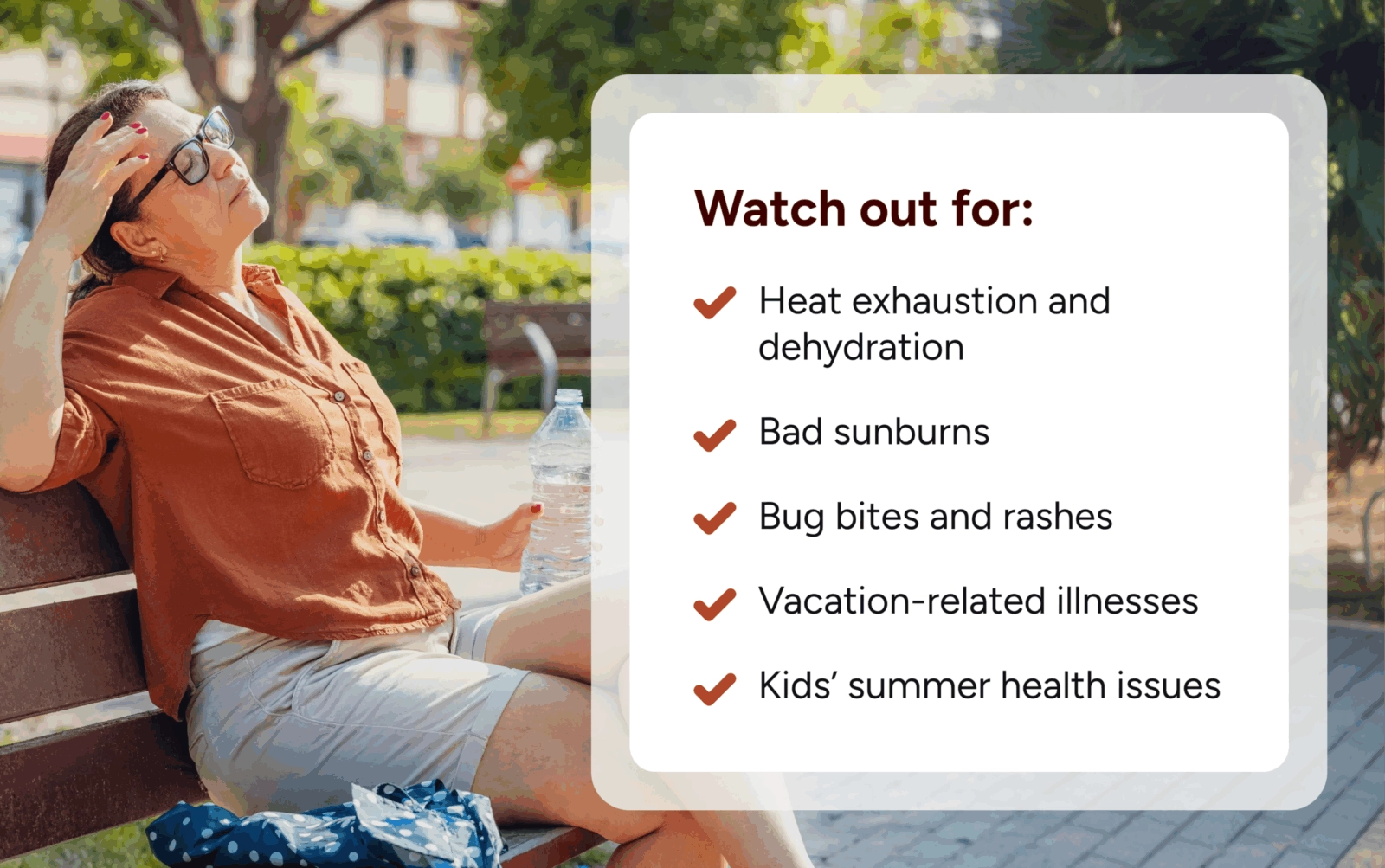
5 summer health problems to watch for
Good summer safety also means knowing how to respond when something goes wrong. Summer illness looks different depending on the person and the situation, and it especially catches people off guard because it often starts as something minor.
Here’s how to recognize and respond to five of the most common warm-weather health concerns.
1. Heat exhaustion and dehydration symptoms
Learning to recognize when overheating is escalating toward heat stroke is critical. These aren’t always dramatic — they can creep up gradually.
What to watch for
Make sure to watch for dizziness or lightheadedness and nausea or vomiting. Also, if you experience hot, dry skin, that means your body has stopped sweating, which is a serious escalation sign. Confusion or disorientation is a medical emergency that requires a trip to the ER.
What to do first
Get out of the sun immediately. Move to shade or air conditioning. Apply cool (not ice-cold) cloths to the neck, armpits, and wrists. Drink cool water in small, steady sips.
When to get care
If symptoms don’t improve quickly with cooling and hydration — or if sweating stops, confusion appears, or things are getting worse — seek urgent care. Heat stroke is an emergency situation.
2. Sunburn symptoms that need more than home care
What to watch for
Blistering signals a second-degree burn and increases infection risk. Significant swelling — especially on the face — nausea, chills, body aches, or feeling flu-like are signs of sun poisoning, not just a typical burn.
What to do first
Get completely out of the sun. Hydrate consistently. Use cool compresses and gentle moisturizer. Avoid ice, butter, or oil-based products directly on burned skin.
When to get care
A sunburn with blistering, fever, nausea, or systemic symptoms isn’t always a wait-and-see situation. A virtual visit can assess severity, guide treatment, and tell you whether you need in-person care.
3. Bug bites and summer-related rashes
What to watch for
If you’ve been exposed to ticks in wooded or grassy areas, prompt removal matters for Lyme prevention. Also, contact with poison ivy or oak can cause a spreading, blistering rash. The urushiol oil that causes it sticks to your skin and clothes and can make things worse if not fully washed away after exposure.
Keep an eye out for signs of secondary skin infection, such as increasing redness, warmth, swelling, or discharge from a scratched bite or open blister. See when to go to urgent care for a rash when you’re not sure what you’re looking at.
What to do first
Wash skin and clothing thoroughly after potential tick or poison ivy exposure. Avoid scratching — it opens the skin to infection and can spread urushiol to new areas. Monitor closely for the next 48–72 hours to see if things worsen.
When to get care
Don’t ignore it if you find an embedded tick in a Lyme-risk area, a rash is spreading rapidly or looks infected, blistering is significant, or you develop a fever alongside it.
4. More serious sick-on-vacation symptoms
Travel changes the summer illness equation. Eating out more, disrupted sleep, and exposure to new food environments all raise your risk for GI issues. And being away from home makes it easy to delay care much longer than you should. If a fever develops while you’re traveling, here’s guidance on when to go to urgent care for a fever.
What to watch for
A single episode of vomiting or diarrhea after travel is common, but symptoms that won’t let up are a different situation entirely. As Dr. Hockenberry notes, “If 24 hours go by and you’re still vomiting, you should seek care, because it means you’re not holding down fluids.” Also watch for weakness, dizziness, and signs of dehydration (like dry mouth, dark urine, or a rapid heartbeat). These are signals that your body is depleting fluids faster than you can replace them on your own. Once you’re at that point, waiting it out without guidance usually makes things worse.
What to do first
Start rehydrating early with small, frequent sips. Don’t wait until symptoms feel urgent, and don’t delay care just because being away from home feels complicated.
When to get care
Inability to keep fluids down for more than 24 hours or experiencing worsening symptoms warrant medical attention for adults and children alike.
5. Kids’ summer health issues
What to watch for
If you notice ear pain after pool or lake time that worsens when you tug on the ear, this could be a sign of swimmer’s ear that needs to be treated. Also be mindful that heat symptoms in children come on faster than in adults. “It’ll happen much more quickly in kids,” Dr. Hockenberry warns. “If they start to complain of a headache, dizziness, or nausea, it’s gone too far.”
Watch for scrapes as well that develop swelling, redness, discharge, or worsening tenderness — those are signs of infection setting in. And if a child cannot put weight on a leg or foot after a fall, that needs same-day evaluation. For more guidance, see when to see a doctor for a fever in a child.
What to do first
Get your child out of the heat or water. Clean minor scrapes and cover them. Watch closely for red flags over the following 24–48 hours.
When to get care
Seek care for heat symptoms that aren’t improving with fluids and rest, swimmer’s ear, scrapes showing signs of infection, or an inability to bear weight after an injury. A virtual visit can safely triage many of these situations. Get in-person care for anything involving a possible fracture or escalating heat illness.

3 tips for getting the right care this summer
Knowing your summer health tips and summer safety tips is one part of staying well this season. Knowing where to turn when something actually comes up is the other. Here are three summer wellness tips for navigating your care options confidently — wherever summer takes you.
1. Start with virtual care for common symptoms
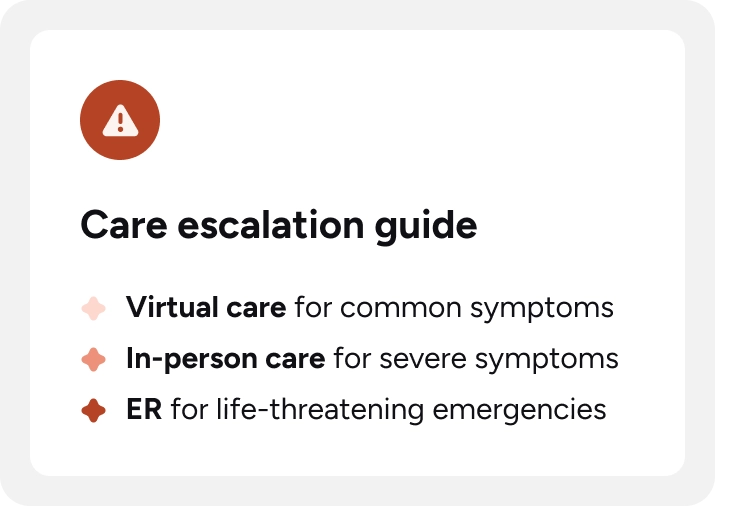
Doctor On Demand’s virtual urgent care is a smart first step for a wide range of summer concerns. A virtual doctor can evaluate your symptoms, recommend home treatment, prescribe medication when needed, and tell you directly if you need in-person care — all without a waiting room.
Virtual care works well for:
- Rashes and bug bites
- Swimmer’s ear
- Mild to moderate sunburn
- Mild fever and fever-related questions
- Mild dehydration when you’re alert and able to keep fluids down
- Suspected infected scrapes
- Nausea, vomiting, or diarrhea — especially to get guidance on whether to escalate
- Being away from home and unsure where to start
2. Get in-person care when symptoms are more severe
Head to urgent care for:
- Symptoms worsening despite home treatment
- Severe blistering sunburn
- A spreading or significantly infected wound
- Inability to bear weight after an injury
- Ocean or water injuries, including jellyfish stings
Go to the ER for:
- Near-drowning or submersion emergencies
- Trouble breathing or the feeling that your throat is swelling shut
- A visibly displaced bone or joint deformity
- Confusion or disorientation — signs of severe heat illness
- Severe dehydration or inability to keep any fluids down
3. Don’t wait too long to get care
People delay care more when they’re traveling or off their normal routine — and waiting can turn manageable problems into bigger ones. A key summer safety principle to remember: being away from home is a reason to seek guidance sooner, rather than later. Virtual care removes the barrier of finding a clinic somewhere unfamiliar and puts real medical guidance in your hands within minutes. Getting answers early is the smartest move you can make.

What a doctor would do:
Tips from Dr. Hockenberry
Here’s how Dr. Hockenberry thinks through four common summer health situations — for herself and as a parent.
If I felt overheated or dehydrated after being outside:
What I’d ask myself: Am I just hot and thirsty, or am I feeling dizzy, nauseated, or weak? Am I still sweating, or does my skin feel hot and dry? Have I had enough water, shade, and time to actually cool down?
What I’d watch for: Dizziness. Nausea or vomiting. Hot, dry skin. Symptoms that continue after moving to a cool area.
What I’d do first: Stop activity, move to shade or air conditioning, and start hydrating. If symptoms are mild and I’m alert, a virtual care visit is a solid first step. If things are escalating, I’d seek urgent in-person care without hesitation.
“Your body’s telling you, ‘Hey, I need water. I need shade. I need to cool down.'”
If I got a bad sunburn and started feeling worse:
What I’d ask myself: Is this surface soreness, or am I experiencing blistering, swelling, nausea, or body aches? Am I starting to feel genuinely sick — not just sunburned?
What I’d watch for: Blistering. Significant swelling. Flu-like symptoms. Pain that feels out of proportion to the burn.
What I’d do first: Get out of the sun, hydrate, use appropriate pain relief, and seek care if I’m feeling systemically unwell or the burn is large or blistered.
“Once the burn is there, we can’t undo it… but we can make sure you’re doing okay and help you treat it appropriately.”
If I were vomiting or had diarrhea while traveling:
What I’d ask myself: How long has this been going on? Am I keeping fluids down? Am I delaying care just because I’m not at home?
What I’d watch for: Vomiting continuing past 24 hours. Inability to keep any fluids down. Weakness, dizziness, or growing dehydration.
What I’d do first: Start rehydrating early. Use virtual care if symptoms are still manageable. Escalate to in-person care if I can’t keep fluids down or symptoms keep worsening.
If my child had a symptom that seemed small at first:
What I’d ask myself: Is my child alert and improving with shade, water, or rest? Or are they complaining of a headache or dizziness?
What I’d watch for: Heat symptoms that escalate quickly. Ear pain after swimming. Inability to bear weight. Scrapes showing signs of infection. Anything not improving the way I’d expect.
What I’d do first: Remove the trigger. Start simple care at home. Use virtual care if the child is alert and stable. Go in person for any red flags.

Take the next step with these summer health tips
Most summer health problems are common, manageable, and very treatable — especially when you catch them early and know where to start. Sunburns, stomach bugs mid-trip, a kid who spent too long in the heat: these things happen every summer to real people with real plans. They don’t have to derail yours.
What matters most is recognizing when something is escalating and acting on it rather than waiting to see how things go. These summer wellness tips give you that framework. And when you want answers quickly, virtual care puts a real doctor within reach from anywhere — no waiting room, no dead ends, no guessing whether something is serious enough to warrant attention.
Ready to get care today? Book a virtual visit with Doctor On Demand and get answers without losing another hour of summer waiting around. Need to understand your options first? Explore virtual urgent care and learn when it makes sense to be seen now.
About the authors

Dana Duran is a copywriter with over 15 years of experience writing and editing content for start-ups, wellness brands, and non-profits, including 10 years of writing, editing, and producing in the museum and cultural space. She currently lives and works in San Diego, CA.

Dr. Heather Hockenberry is board certified in family medicine. She earned her doctor of medicine degree at the University of Nevada Reno School of Medicine where she also completed her internship and residency in family medicine, serving as chief resident during her time there. As an urgent care physician for a decade prior to coming to Included Health, she treated acute illnesses and injuries of a diverse nature in a clinic setting. She came to Included Health in 2015 as a staff physician, and currently serves as an associate medical director supporting our clients from a clinical perspective.