
Feeling off? Get to the root of mental health symptoms.
In this article
- What are hormones?
- What is the connection between hormones and mental health?
- Hormones that can influence mental health
- Common signs that hormone changes may be affecting mental health
- What would a doctor do?
- Why symptoms can overlap
- What causes hormonal imbalance?
- How can you regulate your hormones?
- Can sleep problems make hormone-related mental health symptoms worse?
- When it’s time to seek support
- Should you start with behavioral health or primary care?
- FAQs about hormones and mental health
- Take the next step
If you’ve noticed changes in your mood, felt more anxious than usual, or struggled with sleep — and can’t quite explain why — it could be connected to your hormones. Hormones and mental health are closely linked, and shifts in how you feel emotionally can be tied to real, measurable changes happening in your body.
Hormones help regulate many systems in the body, including those that influence mood, stress response, sleep quality, energy levels, and emotional resilience. When hormone levels shift, the effects can show up in how you think, feel, and function day to day.

What are hormones?
Think of hormones as chemical messengers that travel through your bloodstream, delivering instructions to different parts of your body.
They help manage everything from your sleep-wake cycle to how you respond to stress, how you process emotions, and even how clearly you can think. They regulate sleep, metabolism, energy, reproductive health, and emotional well-being.
When hormones function within their optimal range, they work quietly through the neuroendocrine system, which connects your brain, nervous system, and hormone-producing glands. But when hormone levels shift — whether due to life stage changes, stress, sleep disruption, or other health factors — you may notice changes in how you feel day-to-day.

What is the connection between hormones and mental health?
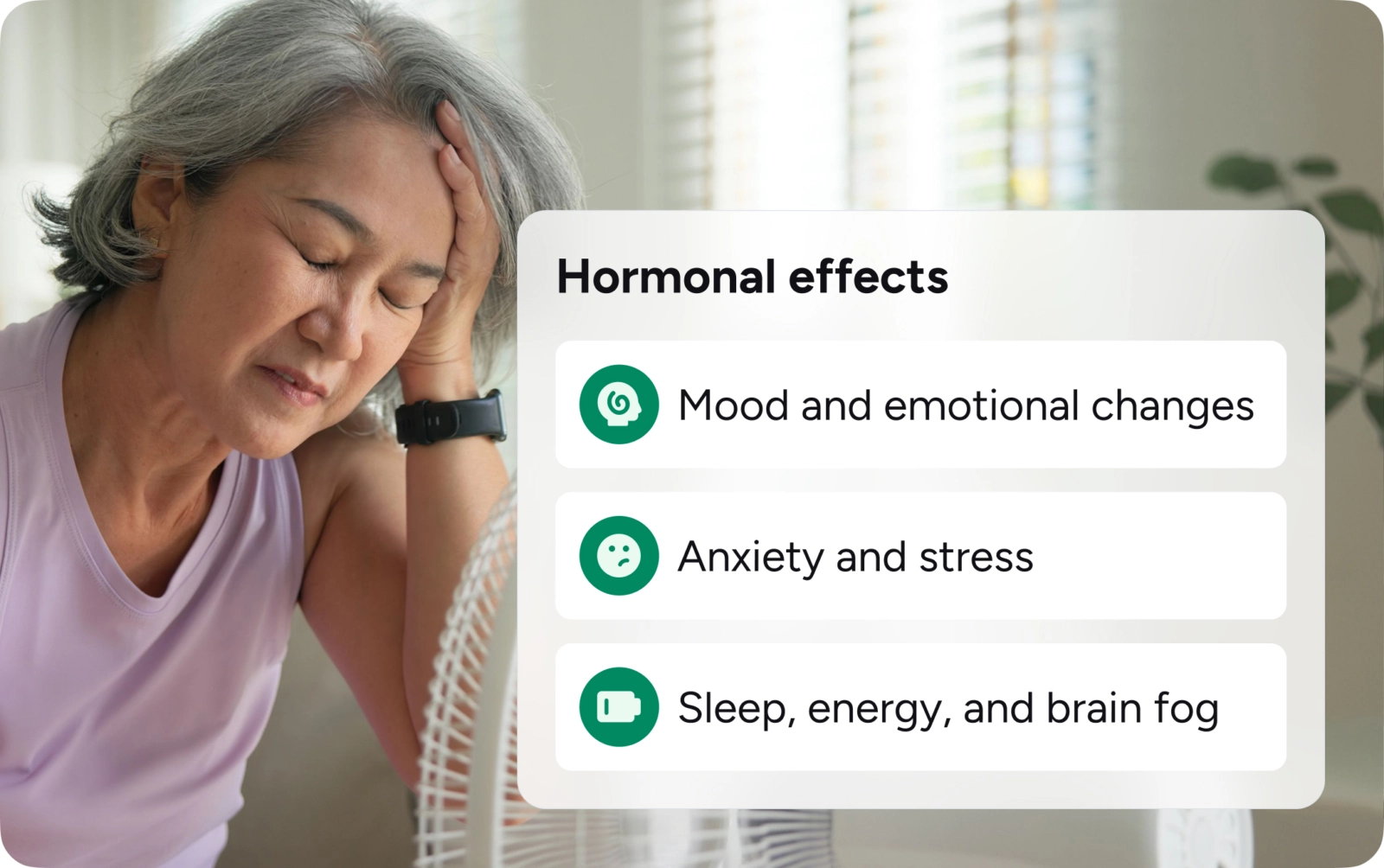
When hormone levels shift or move outside their optimal range, it can affect how you feel emotionally and mentally. Hormones influence mood regulation, anxiety levels, irritability, sleep quality, focus, energy, and emotional resilience. Research shows that when estrogen and progesterone fluctuate throughout your cycle, your body’s stress response can become more intense — which helps explain why some people feel more anxious or low during certain times of the month.
The connection works both ways. Hormonal changes can contribute to mental health symptoms, and mental health challenges like chronic stress or depression can also affect hormone function. Hormone changes are one contributing factor among many. Mental health symptoms like anxiety, depression, or poor sleep often have overlapping causes — stress, behavioral health conditions, sleep problems, thyroid issues, or other medical concerns can all play a role.

Hormones that can influence mental health
Several different hormones can affect mental well-being:
Reproductive hormones
Estrogen and progesterone fluctuations throughout the menstrual cycle can significantly affect mood and emotional regulation. Some people experience mood shifts, increased anxiety, or irritability in the days leading up to their period.
During pregnancy, dramatic hormonal shifts can affect emotional stability. The postpartum period brings another major change: hormone levels drop sharply after delivery, which can contribute to postpartum depression or anxiety. Perimenopause and menopause bring unpredictable fluctuations that can cause anxiety, mood changes, irritability, or depression.
Thyroid hormones
Your thyroid acts as your body’s metabolic thermostat. When thyroid function is high (hyperthyroidism), you might feel anxious, irritable, restless, or panicky. When thyroid function is low (hypothyroidism), you might feel heavy, foggy, low-energy, or depressed.
Cortisol and the stress response
Cortisol is the hormone involved in your fight-or-flight response. With chronic stress, elevated cortisol can contribute to anxiety, hypervigilance, and poor sleep. Here’s something surprising: while long-term stress typically raises cortisol levels, people with anxiety disorders often actually have lower cortisol than those without anxiety. In contrast, people with major depression tend to have higher cortisol over time.
Insulin and mood stability
Insulin helps regulate blood sugar and ensures your brain has steady energy. When blood sugar fluctuates significantly, it can contribute to irritability, mood swings, difficulty concentrating, and low frustration tolerance.
Testosterone and emotional well-being
Testosterone is present in all bodies, though in different amounts. Shifts in testosterone levels can affect energy, self-esteem, mood, irritability, motivation, and overall sense of vitality.

Common signs that hormone changes may be affecting mental health
Understanding the link between hormones and mental health starts with recognizing potential symptoms. If you’re experiencing any of these, hormone changes could be one contributing factor:

These symptoms are not unique to hormone issues. They can also indicate behavioral health conditions, chronic stress, sleep disorders, or other medical concerns. That’s why it’s important to seek evaluation by a provider when symptoms persist.

What would a doctor do?
Tips from Dr. Hockenberry
If you’re wondering whether hormones might be behind what you’re experiencing, here’s what Dr. Hockenberry recommends:
Look for patterns first:
- Are your symptoms cyclical — showing up every month around the same time? For women of childbearing age, that could point to premenstrual dysphoric disorder or hormonal fluctuations related to the menstrual cycle.
- Is it a sudden onset during a particular life stage? That might suggest perimenopause or menopause.
- Are your symptoms hard to explain? If there’s nothing going on in your life that would explain why you feel anxious, depressed, or emotionally flat — no major life event, no obvious trigger — then getting a hormone workup with your primary care provider is the right next step.
What not to do:
- Don’t try to treat your thyroid yourself with natural remedies.
- Don’t try to balance estrogen, progesterone, or testosterone on your own.
- Many women try plant-based phytoestrogens or other supplements, but these aren’t FDA approved, and there’s no reliable guidance on dosages because they haven’t been properly studied.
- If you suspect your hormones are out of balance, see your provider.
Consider both primary care and mental health support:
- Recognizing there’s a physiologic cause for how you’re feeling — and that it’s something that can be managed — is important.
- Would it hurt to see both a therapist and get a hormone workup? Probably not.
- Speaking with a therapist while you’re being cared for by your primary care doctor can be helpful, especially if you’re crying every day because your hormones are out of balance.


Why symptoms can overlap
Racing heart, fatigue, low motivation, poor sleep, anxiety, and brain fog can all be signs of mental health conditions, chronic stress, thyroid issues, reproductive hormone shifts, blood sugar fluctuations, sleep problems, or other medical conditions.
This overlap is exactly why seeing a doctor is the safest, most helpful next step when symptoms persist or interfere with daily life. A provider or therapist can help distinguish between hormones and mental health concerns, identify contributing factors, and guide you toward appropriate care.

What causes hormonal imbalance?
Life-stage changes like puberty, pregnancy, postpartum, perimenopause, and menopause all bring natural hormonal fluctuations. Chronic stress produces excess cortisol, which can throw other hormones out of balance. Sleep disruption creates a cycle where poor sleep disrupts hormone regulation, and hormonal imbalances interfere with sleep quality.
Medications including birth control and certain prescriptions can affect hormone levels. Underlying medical conditions such as PCOS (polycystic ovary syndrome), thyroid disorders, and diabetes can cause hormonal disruptions. If you have PCOS, you’re three times more likely to experience anxiety or depression than someone without the condition.

How can you regulate your hormones?
Many people wonder how they can regulate hormones naturally. While you can’t directly control every aspect of hormonal function, and there is no over-the-counter solution for hormonal imbalance. While you can’t directly control every aspect of hormonal function, the supportive strategies below can help.
- Getting enough sleep.
Consistent sleep and wake times support hormone regulation. The relationship between sleep problems and depression is particularly strong — sleep disturbances can be both a symptom and a cause. - Managing stress.
Managing stress through movement, mindfulness, or working with a therapist. Research shows interventions like mindfulness and relaxation can actually lower cortisol levels and improve how you feel. Learning ways to prioritize your mental health can make a meaningful difference in how you feel day to day. - Nutrition
Eating regularly and including protein, healthy fats, and fiber helps reduce mood swings. Moving your body supports hormonal balance and mental health.
There are many ways to boost your mood through lifestyle changes that complement hormonal health. Seeking care when symptoms persist is essential.
Self-treatment is not a substitute for doctor evaluation when symptoms are affecting your mental health or daily functioning.

Can sleep problems make hormone-related mental health symptoms worse?
Sleep is when your brain and body repair, reset, and regulate hormone production. Poor sleep disrupts emotional resilience and interferes with how well hormones function.
Physical issues that affect sleep — like sleep apnea, night sweats, chronic pain, or restless leg syndrome — can also indirectly affect mental well-being. When sleep quality drops, anxiety may feel worse, mood changes become harder to manage, and emotional resilience feels depleted.

When it’s time to seek support
When you’re experiencing symptoms related to hormones and mental health, consider seeking support when:
- Symptoms are affecting work, relationships, parenting, or daily life
- Anxiety, low mood, irritability, or poor sleep keep returning
- You feel unlike yourself and can’t explain why
- Physical and emotional symptoms are showing up together
- You’re not sure whether to start with behavioral health or primary care
Care is key before symptoms reach a crisis point. Understanding why it’s important to care for your mental health can motivate you to seek support when you need it.

Should you start with behavioral health or primary care?
Not sure whether to start with a therapist or your doctor? It depends on what you’re experiencing most. Here’s how to think through your first step.
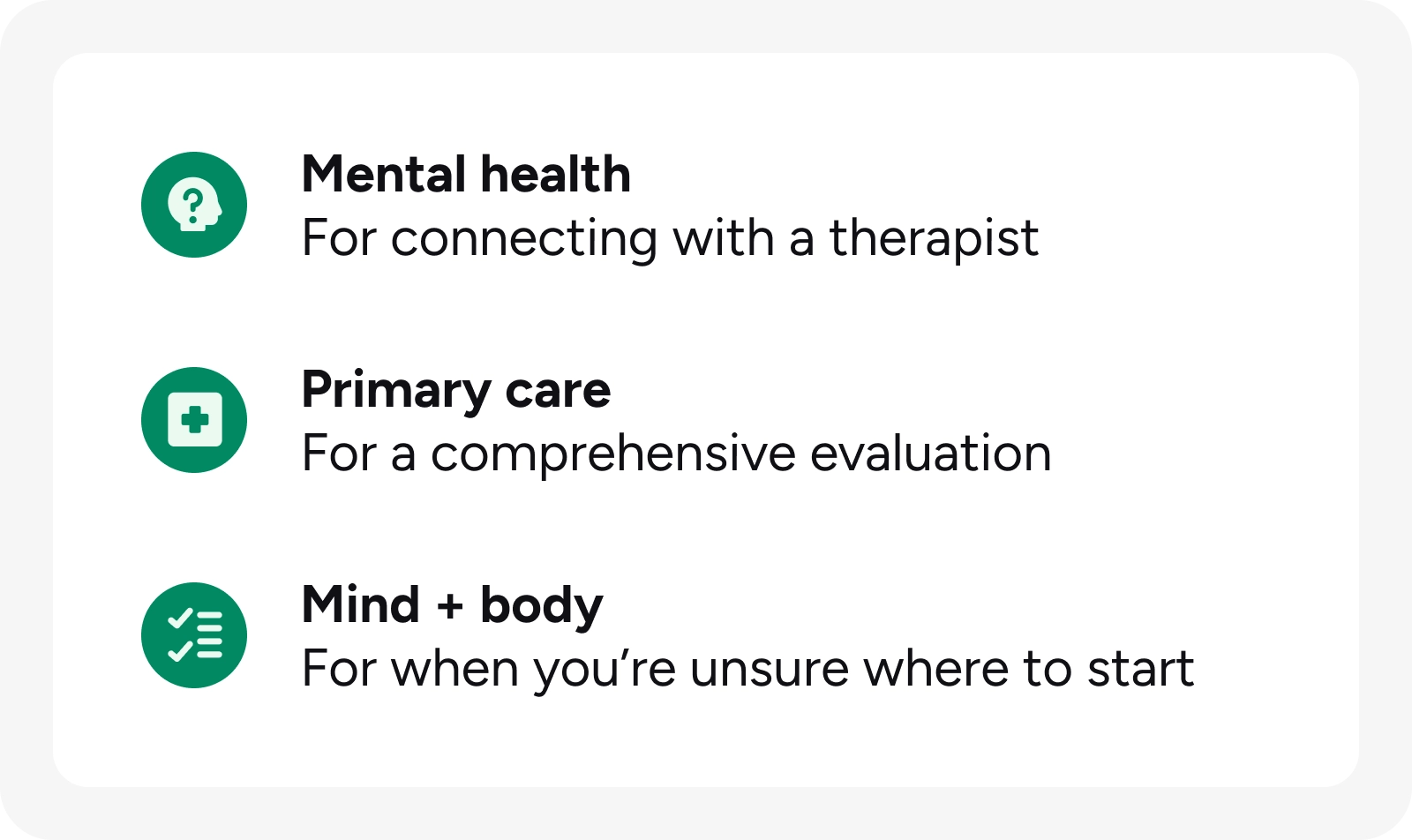
Behavioral health may be the best place to start when:
- Anxiety, emotional changes, overwhelm, or low mood are front and center
- Stress-related sleep issues are affecting daily life
- You want support developing coping strategies
Book a mental health visit to connect with a therapist.
Primary care may be the best place to start when:
- There are physical symptoms alongside emotional changes
- You’re wondering whether thyroid issues or medical factors could be contributing
- You want a medical evaluation
Book a primary care visit for comprehensive evaluation.
In some cases, both are useful. The goal isn’t choosing perfectly — it’s getting started with care. Dr. Hockenberry agrees, “Would it hurt to see both? Probably not. Even having someone to talk to therapy-wise while you’re undergoing a hormone workup — that’s not a bad thing.”

FAQs about hormones and mental health
Can hormones cause anxiety?
Yes, hormones can contribute to anxiety. Thyroid imbalances, cortisol fluctuations from stress, and reproductive hormone changes during your cycle, pregnancy, or perimenopause can all affect anxiety levels. However, anxiety is often multifactorial, so professional evaluation helps identify what’s happening.
Can hormones cause depression?
Hormones can play a role in depression. Low thyroid function, reproductive hormone shifts (especially postpartum and during perimenopause), and chronic stress affecting cortisol can all contribute to depressive symptoms. Depression is complex and usually involves multiple factors, which is why evaluation is important.
Are hormones only related to women’s mental health?
No. While reproductive hormones primarily affect people assigned female at birth, hormones affect everyone’s mental health regardless of gender. Thyroid hormones, cortisol, insulin, and testosterone influence mood and well-being in all bodies.
Can thyroid problems affect mood?
Yes. An overactive thyroid (hyperthyroidism) can cause anxiety, irritability, and restlessness. An underactive thyroid (hypothyroidism) often causes depression, fatigue, and brain fog. Many people with mood symptoms are screened for thyroid issues.
Can sleep problems make hormone-related symptoms worse?
Absolutely. Sleep is when your body regulates hormone production. Poor sleep disrupts this process and can worsen both hormonal imbalances and mental health symptoms.
What are signs of hormonal imbalance?
Common signs include mood changes, anxiety, irritability, fatigue, brain fog, poor sleep, appetite changes, menstrual irregularities, and feeling unlike yourself. However, these symptoms overlap with many conditions, so they’re not diagnostic on their own. If you’re experiencing persistent symptoms, evaluation can help identify what’s contributing.
Should I see a therapist or a doctor first?
If emotional symptoms like anxiety or low mood are most prominent, starting with a therapist is often helpful. If you have physical symptoms alongside emotional changes, starting with primary care makes sense. When unsure, either one is a good starting point.
What should I do if I just don’t feel like myself?
Trust that instinct. Feeling unlike yourself is a valid reason to seek support. Document what you’re noticing — changes in mood, energy, sleep, or physical symptoms. Pay attention to patterns. Then reach out to either a therapist or primary care provider. You don’t need it all figured out before seeking care.

Take the next step
The relationship between hormones and mental health is closely connected, but symptoms can overlap with many other conditions — which is why thoughtful evaluation matters. Whether you’re dealing with anxiety, low mood, sleep problems, fatigue, or changes you can’t explain, your experience is valid and deserves support.
Seeking care even when the cause is unclear is not only okay — it’s often the smartest move. You don’t need to wait until symptoms become severe. There are many ways to improve mental health that can work alongside addressing hormonal concerns.
If emotional symptoms are front and center, booking a mental health visit can connect you with a therapist who understands hormones and mental health. If physical concerns or questions about hormone levels are involved, scheduling a primary care appointment can provide a medical evaluation.
Your well-being matters. When you’re ready to take the next step, mental health support is available.

Feeling off doesn’t have to be your norm
Book a visit with a primary care or mental health provider today.
Get care and explore your benefits to support your total health journey.
About the authors

Dana Duran is a copywriter with over 15 years of experience writing and editing content for start-ups, wellness brands, and non-profits, including 10 years of writing, editing, and producing in the museum and cultural space. She currently lives and works in San Diego, CA.

Dr. Heather Hockenberry is board certified in family medicine. She earned her doctor of medicine degree at the University of Nevada Reno School of Medicine where she also completed her internship and residency in family medicine, serving as chief resident during her time there. As an urgent care physician for a decade prior to coming to Included Health, she treated acute illnesses and injuries of a diverse nature in a clinic setting. She came to Included Health in 2015 as a staff physician, and currently serves as an associate medical director supporting our clients from a clinical perspective.