Page top
Page main content

Perimenopause symptoms deserve real care

Perimenopause can show up quietly — and then all at once. One day you're fine, and the next you can't sleep, can't focus, and feel irritable in a way that doesn't feel like you. If you've been told "it's just perimenopause" and sent on your way, we want you to know that's not good enough.

At Doctor On Demand®, our providers actually listen. They take your symptoms seriously, work with you to understand what's going on, and build a care plan that fits your life — not a one-size-fits-all answer. And your visit may be covered at little or no cost through your benefits.


So — What exactly is perimenopause?

Perimenopause is the transition period leading up to menopause, when your body gradually begins producing less estrogen and progesterone. It's not a single event. It's a phase — one that can last anywhere from a few years to more than a decade, and it can start earlier than most people expect, often in your early-to-mid 40s (and sometimes even in your late 30s).
During this time, your hormone levels don't decline in a straight line. They fluctuate — sometimes wildly — which is why symptoms can feel so unpredictable. One month feels totally normal, the next, you're lying awake at 3 a.m., snapping at people you love, and forgetting why you walked into the room.

  • Perimenopause is the transition phase. Your periods may become irregular, but they haven't stopped entirely. This is when most symptoms are at their most intense.
  • Menopause is a single point in time defined as 12 consecutive months without a period. The average age in the U.S. is 51.
    Postmenopause is everything after that. Some symptoms ease over time; others (like vaginal dryness or bladder changes) can continue.
  • The confusing part? You can be deep in perimenopause without realizing it — because standard hormone tests don't always tell the full story, and symptoms get attributed to everything else first: stress, anxiety, burnout, aging. A provider who understands perimenopause will look at your whole picture, not just your labs.

When estrogen fluctuates, it doesn't just affect your reproductive system. Estrogen has receptors throughout your body — in your brain, your bones, your heart, your bladder, your skin. That's why perimenopause can show up as mood changes, memory issues, joint aches, sleep problems, and more. It's all connected. And it's all real.

Why perimenopause can be so hard to navigate

It's not in your head. And it's not something you just have to push through. The symptoms are real and can often be mistaken for something else.

  • Mood changes and anxiety: Fluctuating estrogen affects serotonin and other brain chemicals, which can cause anxiety, irritability, or feelings of depression that seem to come out of nowhere.
  • Sleep disruption and night sweats: Hormonal shifts can make it hard to fall asleep, stay asleep, or feel rested, even when you do everything right.
  • Brain fog: Forgetting words mid-sentence. Losing your train of thought. Struggling to concentrate. It's one of the most common, and most dismissed, symptoms of perimenopause.
  • Unpredictable periods: Your cycle may shorten, lengthen, get heavier, get lighter, or disappear for months before coming back. It's a lot to keep up with.
  • Not feeling like yourself: Maybe it's a combination of all of the above. A low-grade sense that something has shifted, and no one seems to take it seriously.

Perimenopause can last anywhere from a few years to more than a decade, and because the symptoms overlap with stress, aging, and everyday life, they're often brushed off even by doctors. You may have been told your labs are "normal," or that what you're feeling is "just part of getting older." But symptom burden is real whether or not a blood test captures it. You deserve a provider who treats you like a whole person, not a number on a lab panel.

Signs it might be time to talk to someone

If any of the following sound familiar, you don’t have to manage it on your own:
You're waking up at 3 a.m. and can't get back to sleep. Night sweats or racing thoughts are disrupting your rest, and the exhaustion is piling up.
Close Flip card 5836

Your mood feels like a moving target. You go from fine to frustrated in minutes, or feel a low-level sadness or anxiety that's hard to shake.
Close Flip card 5838

You're forgetting things you never used to forget. Brain fog is making it harder to show up the way you want to at work, at home, everywhere.
Close Flip card 5840

Your periods have become unpredictable or more intense. Heavier bleeding, spotting between cycles, or cycles that have gone MIA for months.
Close Flip card 5842

You've noticed bladder changes. More urgency, leaks when you laugh or sneeze, or discomfort that goes beyond the usual.
Close Flip card 5844

You just don't feel like yourself. Something has shifted, and you're ready to talk to someone who will actually take you seriously.
Close Flip card 5847

What care can look like through Doctor On Demand

Perimenopause isn't a single-specialty problem. We bring the right support together, so you don't have to coordinate it all yourself.

Start here. Our primary care providers can evaluate your full symptom picture, order labs if needed, and connect you to the right specialists — all without you having to start from scratch with every new doctor.

For hormonal and reproductive health, we can refer you to the right OB/GYN who can walk you through hormonal therapy (where appropriate), non-hormonal options, and what to expect as your body transitions through perimenopause.

Anxiety, depression, and mood changes during perimenopause are real — and treatable. Our therapists and psychiatrists understand the hormonal connection and can offer talk therapy, CBT, and medication management when needed.

Bladder leaks or pelvic discomfort? Pelvic floor physical therapy is one of the most effective and underused tools available, and our team can refer you there.

Small, sustainable changes to sleep habits, movement, stress management, and nutrition can make a meaningful difference. We'll help you figure out what actually works for your life.

Hormonal and non-hormonal treatment

Hormone therapy isn't right for everyone, but it's also not something to be afraid of. Our providers are up to date on the latest evidence and will have an honest conversation with you about what's appropriate for your situation, your history, and your goals. If hormonal therapy isn't the right fit, there are effective non-hormonal options too. The point is: there are options. And you get to be part of the decision.

Estrogen, progesterone, and testosterone therapy can be highly effective at relieving hot flashes, night sweats, mood shifts, and sleep disruption, helping you feel like yourself again.

From FDA-approved non-hormonal medications to targeted treatments for specific symptoms, there are real options that work — no hormones required. These options may include:

  • SSRIs/SNRIs (e.g., paroxetine, venlafaxine, escitalopram) — originally antidepressants, but well-evidenced for reducing hot flashes and mood symptoms
  • Fezolinetant (Veozah™) — an FDA-approved non-hormonal medication specifically for moderate-to-severe hot flashes; newer and worth mentioning
  • Gabapentin — sometimes prescribed off-label for hot flashes and sleep disruption
  • Clonidine — can help with hot flashes, particularly for women who can't use hormones
  • Vaginal estrogen — (Sometimes categorized separately since it's low-dose and localized) for vaginal dryness and bladder symptoms

Sleep hygiene, movement, and nutrition won't fix everything, but the right adjustments, tailored to where you are right now, can make a meaningful difference in how you feel day to day.

Cognitive behavioral therapy (CBT) has strong evidence for helping with the anxiety, mood changes, and sleep problems that often come with perimenopause, and our mental health providers know how to apply it in this context. Depending on your plan, this may be covered by insurance.

Pelvic floor exercises, mindfulness practices, and tracking your symptoms over time are simple but powerful tools that can help you feel more in control of what's happening in your body.

Affordable virtual care with or without insurance

With Doctor On Demand, compassionate perimenopause care is available through the benefits you already have. An online doctor costs between $0–$99 depending on your coverage.

  • Covered by insurance? You may pay $0 — Doctor On Demand is a covered benefit for over 98 million Americans.

  • No insurance? Visits start at just $99 per session.

Getting started is easier than you think


1.

Create your account — Sign up and add insurance details for accurate pricing.

2.

Schedule your visit — Choose a time that works for you or see a provider on-demand.

3.

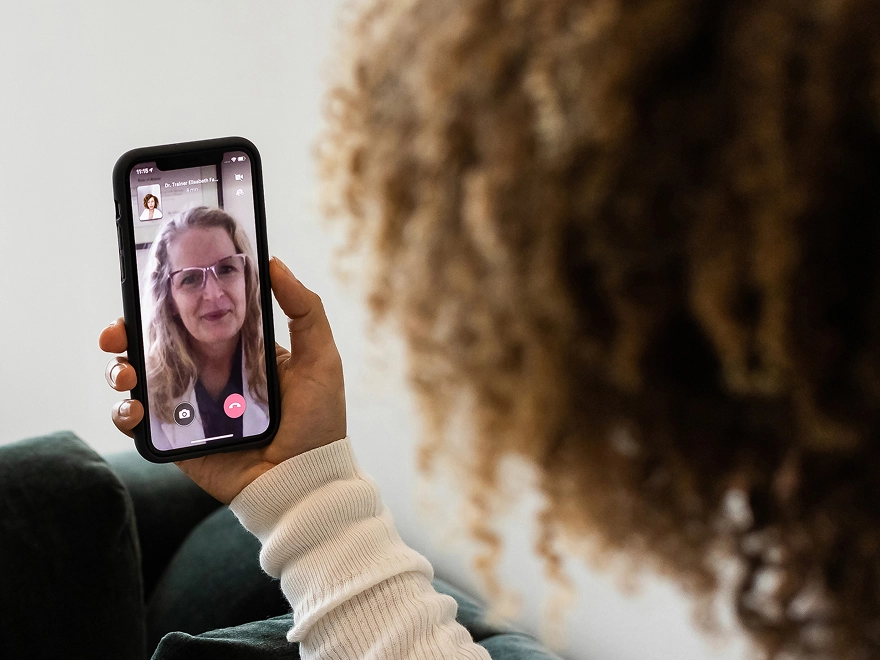
Connect with a provider — Join a secure video consultation with your provider. They’re here to listen, get to know your situation and talk through your options — not just hand over a prescription.

4.

Receive treatment — Get a personalized treatment plan with a prescription sent to your local pharmacy.

Privacy & security you can trust – Doctor On Demand follows strict HIPAA-compliant privacy and security protocols to protect your personal and medical information. Your virtual visit is confidential, and your data is encrypted to ensure a secure experience.

Doctor On Demand app in hand

Care for your reproductive health, anywhere

The Doctor On Demand app allows you to:

  • Request refills and manage prescriptions on the go.
  • Video visit with providers from wherever you have an internet connection.
  • Access your treatment plans and lab results instantly.


Download the app
Download the app

Common questions about perimenopause

No more gaslighting. Just real care from real people