
Table of contents
Back-to-school stress is common, but it doesn’t look the same at every age.
A kindergartner who clings at drop-off is dealing with something very different from a middle-schooler who’s suddenly worried about fitting in, or a teen who’s already stressed about grades, schedules, and what the year means for the future. That’s why it helps to understand not just that kids feel stressed when school starts, but what may be driving that stress in the first place.
The good news is that back-to-school stress often makes more sense once you know what’s behind it. And when you understand what’s typical at each stage, it becomes easier to respond in a way that actually helps.

What causes back-to-school stress?
At the most basic level, back-to-school stress comes from transition.
Routine changes. Expectations go up. Social situations shift. The day becomes more structured. Kids and teens have less control over their time. And the things that felt easy or flexible over summer suddenly have more pressure around them.
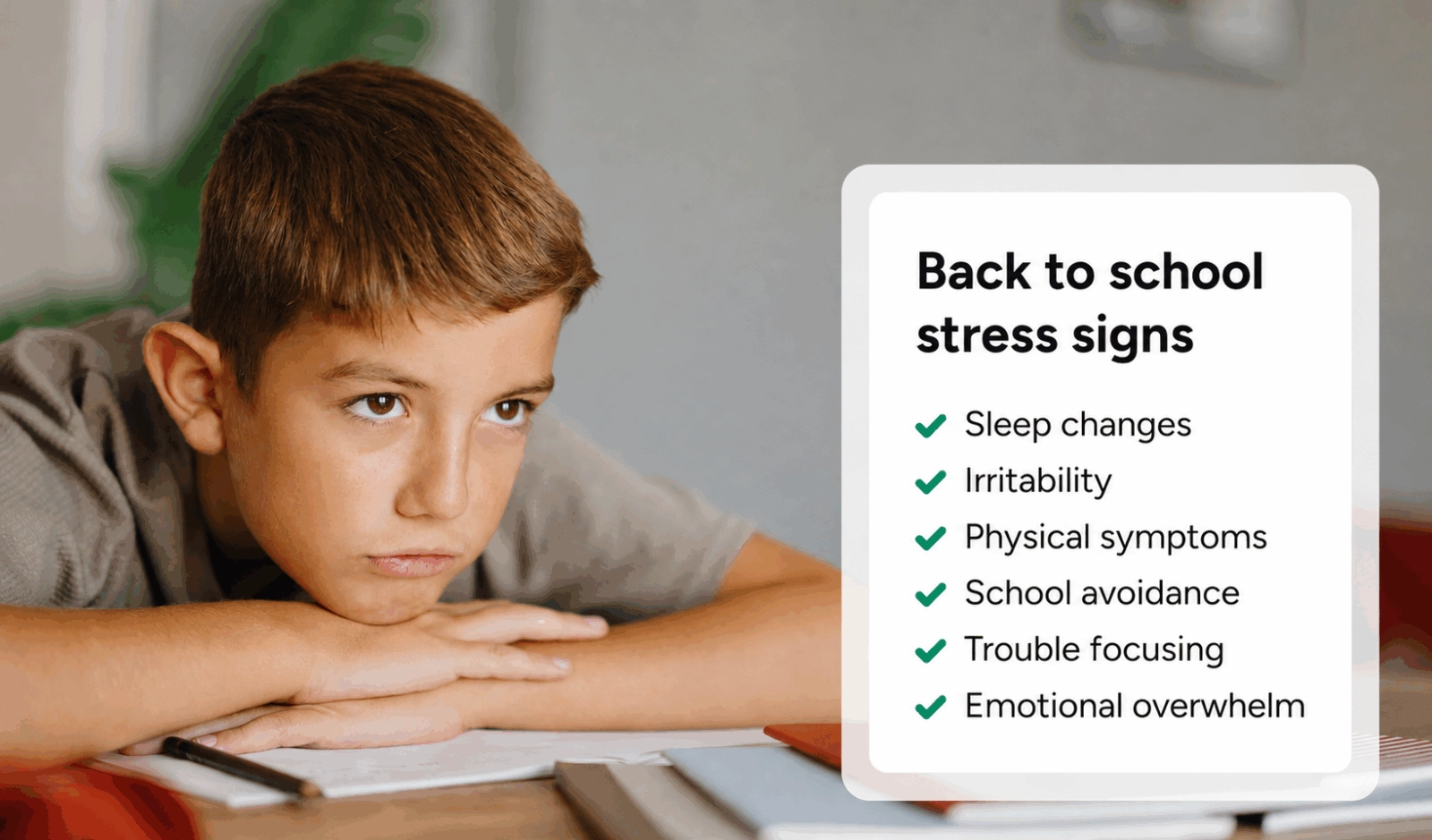
That kind of stress can show up in a lot of ways:
- Sleep changes
- Irritability
- Physical complaints
- Mood shifts
- School avoidance
- Trouble focusing
- Emotional overwhelm
But the specific cause often depends on the child’s age and stage.

Back-to-school stress in younger kids
For younger children, school stress is often about separation, change, and routine disruption.
They may be stressed by:
- Being away from caregivers
- Not knowing what to expect
- Unfamiliar teachers or classrooms
- A different daily structure
- Sensory changes like noise, crowds, and transitions
- Pressure to adjust quickly
This kind of stress often shows up as:
- Clinginess
- Tears at drop-off
- Stomachaches
- Sleep disruption
- Meltdowns after school
- Bigger feelings than usual
For younger kids, school stress usually isn’t about long-term academic pressure. It’s about whether the world feels predictable and safe again.

Back-to-school stress in elementary and middle school kids
As kids get older, school stress often becomes more social and performance-based.
Common causes include:
- Friend dynamics
- Worries about fitting in
- Teacher expectations
- Academic pressure
- Schedule changes
- Fear of embarrassment
- Wanting more independence but not always feeling ready for it
Middle school, especially, can be a peak time for stress because so much is changing at once. Kids may care more about what other people think, compare themselves more, and feel less sure of themselves even when they don’t show it openly.
This age group may show stress through:
- Irritability
- Emotional ups and downs
- School resistance
- Procrastination
- Headaches or stomachaches
- Conflicts at home
- Withdrawing socially

Back-to-school stress in teens
For teens, school stress often becomes more layered.
They may be dealing with:
- Social pressure
- Appearance concerns
- Relationship stress
- Heavier academic demands
- Sports and extracurricular pressure
- Time management
- Future-oriented stress about college, work, or performance
- Trying to seem capable while feeling overwhelmed underneath
Teen stress can be harder to spot because it may show up as:
- Shutting down
- Sleeping too much or too little
- Pulling away from family
- Irritability
- Lack of motivation
- Perfectionism
- Increased conflict
- Physical complaints
- Avoiding schoolwork or responsibilities
Back-to-school stress at this age is often less about one thing and more about the accumulation of pressure.

How school stress can show up
Even when the cause is different, school stress often shows up in similar ways across ages.
Parents and caregivers may notice:
- Trouble sleeping
- Fatigue
- Stomachaches or headaches
- School avoidance
- More tears or irritability
- Withdrawal from activities
- Appetite changes
- More conflict at home
- Difficulty calming down
- A child or teen who just seems unlike themselves
The more stress starts affecting daily life, the more useful it becomes to stop thinking only about what caused it and start thinking about whether a back-to-school mental health checkup is the right next step.

What helps reduce school stress
You can’t remove every stressor, but you can make the transition easier.
A few things that often help:
- Predictable routines
- Calmer mornings
- Realistic expectations
- Sleep support
- Validating feelings without over-amplifying them
- Checking in without overwhelming your child
- Noticing what patterns are emerging
- Helping kids break problems into smaller pieces
Different ages need different versions of support, but one thing stays true across the board: kids usually do better when the adults around them are steady, calm, and paying attention.

When school stress may need more support
Some school stress settles with routine and reassurance. Some of it doesn’t.
It may be time to look more closely at support if stress is:
- Getting worse instead of better
- Affecting sleep, mood, or physical health
- Interfering with school participation
- Causing repeated avoidance
- Changing how your child functions day to day
- Showing up as persistent emotional or physical distress
That doesn’t automatically mean something is seriously wrong. But it does mean the stress may be bigger than a temporary adjustment issue.

What to do when stress gets in the way
Back-to-school stress is common, but it shouldn’t have to quietly take over your child’s school experience or your family’s routine.
If stress seems to be affecting your child’s sleep, mood, coping, or daily life, support can help. The sooner you understand what’s driving it, the easier it usually is to respond in a helpful way.
Book a therapy visit if school stress seems to be getting in the way and you’d like help understanding what may support your child or teen.
About the authors

Quan Lam is a copywriter with over 15 years of experience writing and editing content for both start-ups and legacy brands, as well as 2 years of writing experience exclusively within the healthcare space. She currently lives and works in New York City.

Dr. Heather Hockenberry is board certified in family medicine. She earned her doctor of medicine degree at the University of Nevada Reno School of Medicine where she also completed her internship and residency in family medicine, serving as chief resident during her time there. As an urgent care physician for a decade prior to coming to Included Health, she treated acute illnesses and injuries of a diverse nature in a clinic setting. She came to Included Health in 2015 as a staff physician, and currently serves as an associate medical director supporting our clients from a clinical perspective.