Table of contents
- What is the gut-brain connection?
- How do your gut and brain communicate?
- Can stress and anxiety affect your gut?
- Can digestive problems affect mental health?
- What is the connection between IBS and the brain?
- How can you support your gut-brain connection?
- Doctor’s take: 4 ways to support your gut and emotional well-being
- Can probiotics improve mood or anxiety?
- When should you seek medical or behavioral health support?
- Get support for your gut and emotional well-being
Ever felt butterflies in your stomach before a big presentation? Or noticed digestive discomfort during a stressful week? Those sensations aren’t just in your head. Your gut and brain are in constant communication, and what happens in one can influence the other.
This relationship, known as the gut-brain connection, helps explain why stress and anxiety can affect digestion — and why ongoing digestive problems can affect your emotional well-being.
Understanding how it works can help you recognize what’s happening in your body and when getting support may help.

What is the gut-brain connection?
The gut-brain connection, sometimes called the gut-brain axis, is the two-way communication system between your gastrointestinal (GI) tract and your brain.
Here’s the important thing to keep in mind: your digestive system doesn’t operate independently. It communicates with your central nervous system through nerves, hormones, immune signals, and other biological pathways.
Your gut is also home to trillions of microorganisms, collectively called the gut microbiome. Researchers are continually studying how these microorganisms and the compounds they produce participate in gut-brain communication. But the key thing to understand is that the relationship works in both directions. That means stress can influence digestive function — and digestive symptoms can influence how you feel emotionally.

How do your gut and brain communicate?
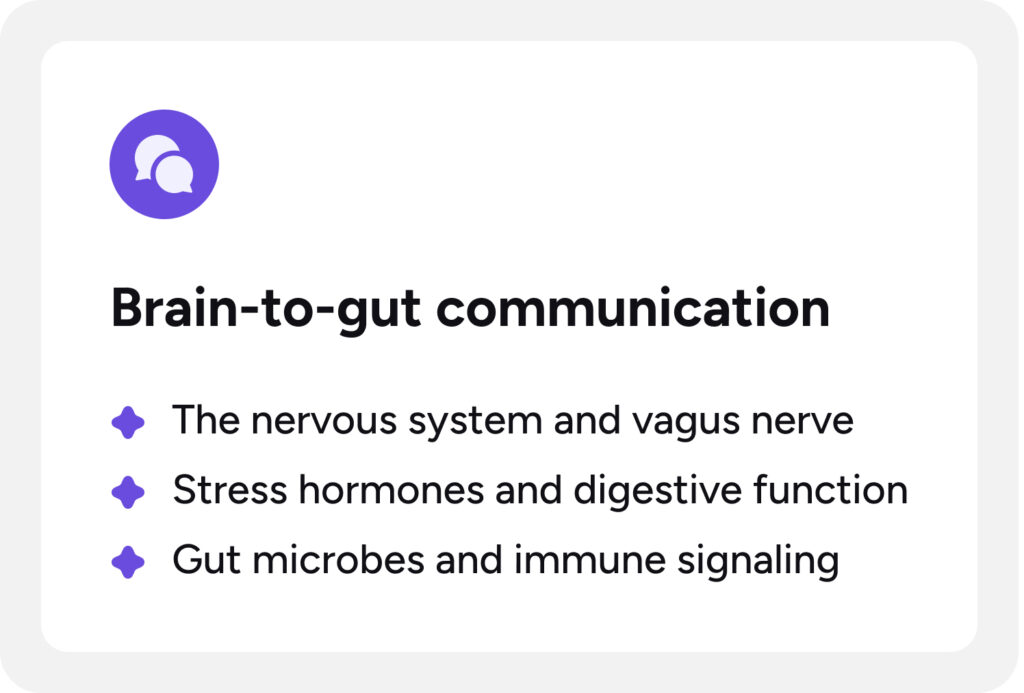
Here’s a look at the systems known to help your gut and brain exchange information.
The nervous system and vagus nerve
Your digestive tract contains a complex network of nerves called the enteric nervous system. Sometimes nicknamed the “second brain,” this system helps regulate digestive processes, like moving food through the intestines.
The vagus nerve is one important communication pathway connecting the brain with organs in the digestive system.
Stress hormones and digestive function
When you’re stressed, your body releases stress hormones that activate systems to help it respond to perceived challenges. Stress hormones and nervous-system changes can influence intestinal movement, digestive sensitivity, and other gastrointestinal functions.
That’s one reason stressful experiences may coincide with stomach discomfort, nausea, diarrhea, or constipation.
Gut microbes and immune signaling
Gut microorganisms produce compounds that interact with immune and metabolic pathways. Scientists are investigating how those interactions influence communication between the digestive tract and the brain.
The research is promising, but, for now, it doesn’t mean that changing your gut bacteria will reliably treat anxiety, depression, or another mental health condition. That said, it’s an important connection to be aware of as the research is ongoing.

Can stress and anxiety affect your gut?
Stress and anxiety can produce real physical digestive symptoms.
For example, you may notice stomach discomfort before an important event, changes in bowel habits during a stressful period, or worsening digestive symptoms when you’re anxious. These experiences can occur because stress influences gastrointestinal motility and sensitivity.
For someone already living with a digestive condition, stress may also make symptoms harder to manage.
Importantly, stress-related digestive symptoms are still physical symptoms. They shouldn’t automatically be dismissed as psychological.

Can digestive problems affect mental health?
It’s important to know the relationship works the other way, too. Living with frequent abdominal pain, unpredictable bowel movements, or persistent digestive discomfort can affect sleep, social activities, work, and overall quality of life.
Over time, those challenges may contribute to stress or anxiety.
Researchers are also investigating how microbiome-related pathways interact with emotional health. However, those findings don’t establish that an individual’s mood symptoms are caused by an unhealthy microbiome.

What is the connection between IBS and the brain?
Irritable bowel syndrome, or IBS, is considered a disorder of gut-brain interaction.
People with IBS may experience recurring abdominal pain associated with changes in bowel habits, including diarrhea, constipation, or both.
Gut-brain signaling can influence how the intestines move and how strongly someone experiences digestive sensations.
That’s one reason IBS treatment may involve more than dietary changes or medication.
The American College of Gastroenterology recommends considering gut-directed psychotherapy for global IBS symptoms. Approaches may include cognitive behavioral therapy or gut-directed hypnotherapy.
This doesn’t mean IBS is imaginary or caused entirely by stress. It means digestive and nervous-system processes can both be relevant to treatment.

How can you support your gut-brain connection?
You don’t need to completely overhaul your routine to support your digestive and emotional well-being.
Small, consistent habits can make a meaningful difference.

Doctor’s take: 4 ways to support your gut and emotional well-being
Tips from Dr. Akin Oyalowo
The gut-brain connection is one reason it’s helpful to look at digestive symptoms in the context of your overall health. Dr. Oyalowo recommends paying attention to the habits and patterns that may influence how you feel and keeping a food diary to identify possible dietary contributors.
- Notice your patterns. Pay attention to when digestive symptoms appear and whether they seem related to particular foods, stress, or changes in your routine.
- Make sleep a priority. Notice whether digestive discomfort changes when your sleep habits change.
- Support your gut through nutrition. Focus on fiber-rich foods and a varied, balanced diet rather than relying on quick fixes.
- Get help when symptoms persist. If digestive symptoms continue or interfere with daily life, talk with a healthcare provider rather than assuming stress is the only cause.
Beyond these tips, regular physical activity, stress management practices, and appropriate mental health care may also support overall well-being.

Can probiotics improve mood or anxiety?
You’ve probably seen products marketed as probiotics for mood, stress, or mental health.
Some researchers are studying whether certain probiotic strains influence psychological symptoms through gut-brain pathways.
But results vary, and there isn’t enough consistent evidence to recommend probiotic supplements as a general treatment for anxiety or depression.
Probiotics also aren’t substitutes for established mental health treatments.
If you’re considering a supplement, talk with a healthcare provider about the evidence, safety, and whether it’s appropriate for your situation. And if you’re looking to better support your gut health, check out our article on how to improve gut health.

When should you seek medical or behavioral health support?
Consider medical evaluation if you have new, persistent, or worsening digestive symptoms, especially unexplained bowel changes, recurring abdominal pain, blood in your stool, or unintended weight loss.
Behavioral health support may be helpful if stress, anxiety, or emotional difficulties are affecting your daily life — or making it harder to cope with ongoing digestive symptoms.
For some people, both types of support may be appropriate.
You don’t have to decide on your own whether a concern is entirely physical or emotional.

Get support for your gut and emotional well-being
Your digestive and emotional health are interconnected, and support doesn’t have to focus on only one part of the picture.
Doctor On Demand® offers convenient virtual access to medical and behavioral health providers who can help you address concerns and determine appropriate next steps.
About the authors

Dr. Heather Hockenberry is board certified in family medicine. She earned her doctor of medicine degree at the University of Nevada Reno School of Medicine where she also completed her internship and residency in family medicine, serving as chief resident during her time there. As an urgent care physician for a decade prior to coming to Included Health, she treated acute illnesses and injuries of a diverse nature in a clinic setting. She came to Included Health in 2015 as a staff physician, and currently serves as an associate medical director supporting our clients from a clinical perspective.

Dana Duran is a copywriter with over 15 years of experience writing and editing content for start-ups, wellness brands, and non-profits, including 10 years of writing, editing, and producing in the museum and cultural space. She currently lives and works in San Diego, CA.