
In this article
Between probiotics, gut cleanses, and countless diet recommendations, figuring out how to improve gut health can feel like another wellness project. But supporting your gut doesn’t have to be complicated.
Some of the most effective habits are things you may already know are good for you: eating a variety of nutritious foods, moving regularly, getting enough sleep, and managing stress.
And the best part is that these benefits are known to extend beyond digestion. Your gut interacts with your immune system, metabolism, and brain, making it an important part of your overall health.
Here’s what the research says about supporting your gut — and when getting personalized guidance may help.
What is gut health?
Your gastrointestinal (GI) tract does more than digest food. It also breaks down nutrients, absorbs what your body needs, helps eliminate waste, and interacts with systems throughout your body.
It’s also home to your gut microbiome, a community of bacteria, viruses, fungi, and other microorganisms. Many of these microorganisms perform useful functions, including helping break down certain dietary fibers and producing compounds that interact with your body.
A healthy gut isn’t defined by having one perfect combination of bacteria. Instead, microbial communities vary from person to person, and your diet, medications, age, and other factors can influence them.

Why gut health matters beyond digestion
Your gut interacts with several systems throughout your body. Here’s what you need to know about how your gut health can influence your overall health.
- Immune health: Gut microbes interact with immune cells and help regulate aspects of immune function. So when your gut microbes are out of balance, your defenses may not be as strong.
- Brain and mood: The gut and brain communicate through nerves, hormones, immune signals, and other pathways (known as the gut-brain connection). That’s why gut issues can sometimes show up as brain fog, mood changes, or just feeling not like yourself.
- Metabolic health: Your microbiome affects how you break down food, store fat, regulate blood sugar, and even how your body signals hunger. Researchers continue to study the connection between the gut and metabolic health, with early findings indicating that gut microbes may impact hunger hormones.
- Skin health: Emerging research strongly suggests connections between gut microbes, immune signaling, and certain inflammatory skin conditions. In short, your gut bacteria can cause inflammation, which may influence your skin health, including your scalp.
These connections are important, but they don’t mean every skin breakout, mood change, or weight fluctuation originates in the gut.
The more useful takeaway is that your health systems interact — and supporting healthy habits can benefit more than one part of your body.

8 ways to improve gut health
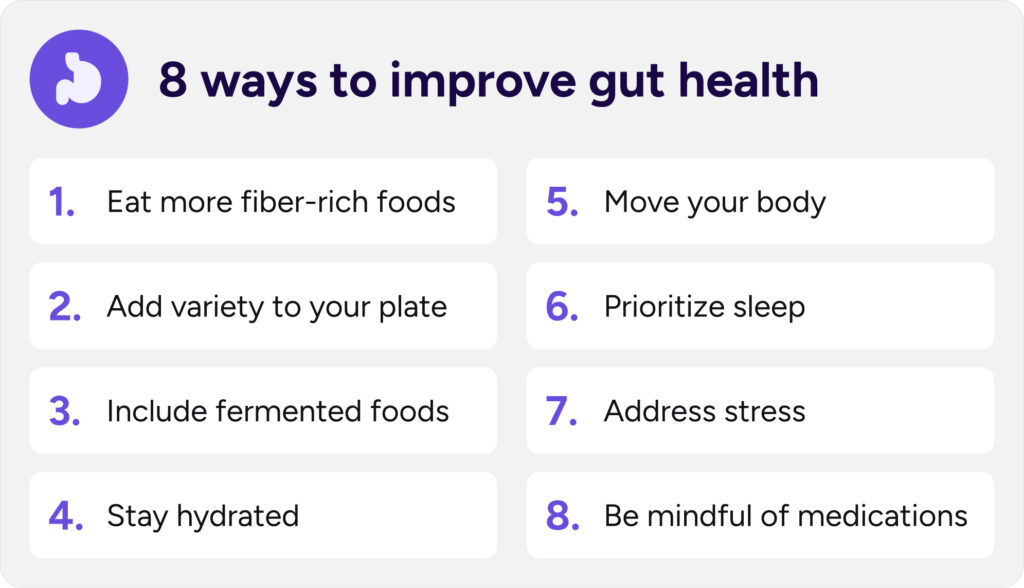
Not sure where to start? Here are a few of the best ways to support your gut health:
1. Eat more fiber-rich foods
Fiber supports digestive regularity, and certain types provide fuel for beneficial gut microorganisms. Good sources include beans, lentils, oats, berries, vegetables, and whole grains.
If you’re not used to eating much fiber, increase your intake gradually. Adding too much too quickly can cause gas or bloating.
2. Add variety to your plate
Different plant foods provide different nutrients and fibers.
Instead of focusing on one supposed superfood, try adding variety throughout the week. You might swap your usual fruit, try a new vegetable, or add beans to a familiar meal.
The goal is a sustainable pattern, not a perfect diet.
3. Include fermented foods when they work for you
Yogurt with live cultures, kefir, kimchi, and sauerkraut are examples of fermented foods.
In a small randomized study published in the journal Cell, researchers found that a fermented-food-rich diet increased gut microbial diversity and reduced certain inflammatory markers among healthy adults. Results from the high-fiber group differed, showing that dietary interventions can affect the microbiome in different ways.
That doesn’t mean fermented foods treat digestive diseases or that everyone needs them. They’re simply one option for adding variety to your diet and diversity to your gut microbiome.
4. Stay hydrated
Adequate fluids support normal digestive function, particularly when you’re eating more fiber.
Your fluid needs depend on factors such as activity, climate, and health conditions. Water is a practical everyday choice.
5. Move your body
Regular physical activity supports overall health and can help maintain normal bowel function.
Walking, cycling, dancing, or another activity you enjoy can be a reasonable place to start.
You don’t need an intense workout routine to make movement part of your day.
6. Prioritize sleep
Sleep and digestive health can influence one another.
Poor sleep may affect stress regulation and gastrointestinal symptoms, while digestive discomfort can make restful sleep harder.
Consistent sleep routines are one useful part of caring for your whole health.
7. Find manageable ways to address stress
Ever notice your stomach acting up before a stressful event?
That’s one example of the gut-brain connection.
Stress can affect bowel movements, digestive sensitivity, and other gastrointestinal functions. Meanwhile, persistent digestive symptoms can create additional stress.
Relaxation practices, physical activity, counseling, and other appropriate strategies may help with the emotional side of this relationship.
8. Be mindful of medications and quick fixes
Certain medications, including antibiotics, can affect digestion and gut microbial communities.
That doesn’t mean you should avoid necessary medication. If you develop digestive symptoms after starting a prescription, talk with your clinician or pharmacist before making changes.
Be cautious about products promising to detox, reset, or completely rebalance your gut. Many such claims lack strong clinical evidence.

What are the best foods for gut health?
Rather than relying on a single food, focus on building a varied eating pattern. Here’s a look at the best foods for gut health and why they’re so effective:
- Beans and lentils: provide fiber and nutrients
- Oats and whole grains: support dietary fiber intake
- Fruits and vegetables: provide varied fibers and plant compounds
- Nuts and seeds: add fiber and other nutrients
- Yogurt and kefir: may contain live microorganisms, depending on the product
A plant-focused or Mediterranean-style eating pattern can be a practical way to bring many of these foods together.

Doctor’s take: 4 simple ways to support your gut
Tips from Dr. Akin Oyalowo
Gut health doesn’t have to become another complicated project. Dr. Oyalowo recommends focusing on practical habits that support digestive and overall health.
- Put fiber first. Build meals around fiber-rich foods such as vegetables, fruits, beans, and whole grains.
- Make variety a habit. Eating different plant foods can help provide a wider range of nutrients and fibers.
- Think beyond food. Hydration, movement, sleep, and stress management can all play a role in digestive health.
- Be skeptical of shortcuts. Probiotics and cleanses aren’t universal solutions. Talk with a clinician before using supplements to address ongoing symptoms.

FAQs about how to improve gut health
Do probiotics improve gut health?
Probiotics are live microorganisms that may provide health benefits when consumed in appropriate amounts.
But whether a probiotic helps depends on the specific strain, dose, and condition being treated.
The American Gastroenterological Association’s clinical guideline found insufficient evidence to recommend routine probiotic use for several common gastrointestinal conditions.
You also don’t need a commercial microbiome test to begin eating a balanced diet. An international expert consensus found limited evidence supporting the routine clinical usefulness of many direct-to-consumer microbiome tests.
If you’re considering a probiotic for a specific concern, ask a healthcare provider whether there’s evidence for its use.
How does gut health affect skin, weight, and mood?
Gut health and skin
Researchers are studying relationships among gut microorganisms, inflammation, immune function, and skin conditions such as acne and eczema.
However, a skin concern doesn’t necessarily indicate a digestive problem, and there isn’t enough evidence to recommend microbiome treatments as a universal solution for skin conditions.
Gut health and weight
The gut microbiome interacts with metabolic processes, but weight is influenced by many factors, including nutrition, physical activity, medications, hormones, genetics, and health conditions.
Improving gut health does not guarantee weight loss.
Gut health and mood
The gut and brain communicate in both directions.
Stress and anxiety can affect digestive function, while ongoing digestive symptoms can influence emotional well-being.
Understanding that relationship may help you recognize when medical care, behavioral health support, or both could be useful.
How can you improve gut health in kids?
Children’s gut microbiomes develop rapidly during early life. Diet, environment, and medications are among the factors that can influence this process.
For parents, the fundamentals are familiar: offer a variety of age-appropriate foods, include fiber, encourage activity, and help children establish healthy routines.
Not every child needs probiotic supplements. Persistent constipation, recurring stomachaches, or other digestive concerns deserve individualized pediatric guidance.
For more, read our guide to gut health for kids.
When should you see a doctor about gut health?
Occasional digestive discomfort may resolve on its own, but certain symptoms deserve evaluation.
Talk with a healthcare provider if you experience persistent or recurring abdominal pain, ongoing constipation or diarrhea, unexplained changes in bowel habits, or symptoms that interfere with daily life. It’s also worthwhile to talk with a provider if you suspect your gut may be impacting other areas of your health.
Blood in your stool, unexplained weight loss, or other concerning changes should be evaluated promptly. Severe abdominal pain, significant bleeding, fainting, or severe dehydration may require emergency care.

Get personalized support for your gut health
Supporting your gut health starts with everyday habits, but you don’t have to figure out persistent symptoms or personal health questions alone.
A Doctor On Demand® provider can help assess your concerns, discuss possible contributing factors, and recommend appropriate next steps. Click the link below to connect with a doctor right from home and get the answers you need.
About the authors

Dr. Heather Hockenberry is board certified in family medicine. She earned her doctor of medicine degree at the University of Nevada Reno School of Medicine where she also completed her internship and residency in family medicine, serving as chief resident during her time there. As an urgent care physician for a decade prior to coming to Included Health, she treated acute illnesses and injuries of a diverse nature in a clinic setting. She came to Included Health in 2015 as a staff physician, and currently serves as an associate medical director supporting our clients from a clinical perspective.

Dana Duran is a copywriter with over 15 years of experience writing and editing content for start-ups, wellness brands, and non-profits, including 10 years of writing, editing, and producing in the museum and cultural space. She currently lives and works in San Diego, CA.