
In this article
Understanding allergies vs. common cold symptoms can be frustrating, especially when you’re trying to decide whether you need rest, allergy medication, or medical care. While both conditions can cause sneezing, congestion, and a runny nose, understanding the key differences can help you take the right next steps toward feeling better.
For a quick symptom assessment, visit our Spring symptom checklist to explore your specific situation.

Allergies vs. common cold symptoms: What’s the difference?
Allergies
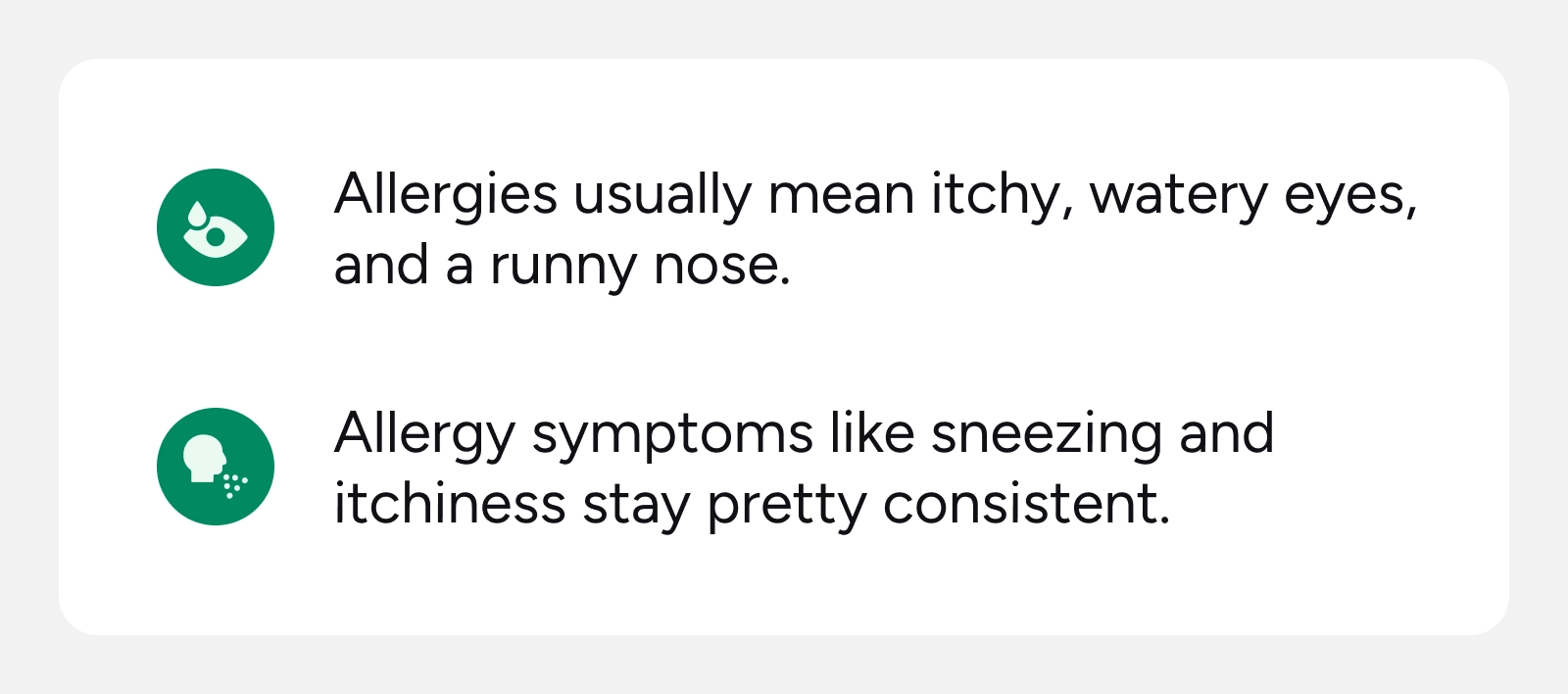
Although symptoms may overlap, allergies and the common cold trigger different immune responses. When you have seasonal allergies, your immune system overreacts to harmless environmental triggers like pollen, treating them as invaders. This response releases histamine and other chemicals, leading to symptoms such as sneezing, itchy eyes, and congestion.
Common cold
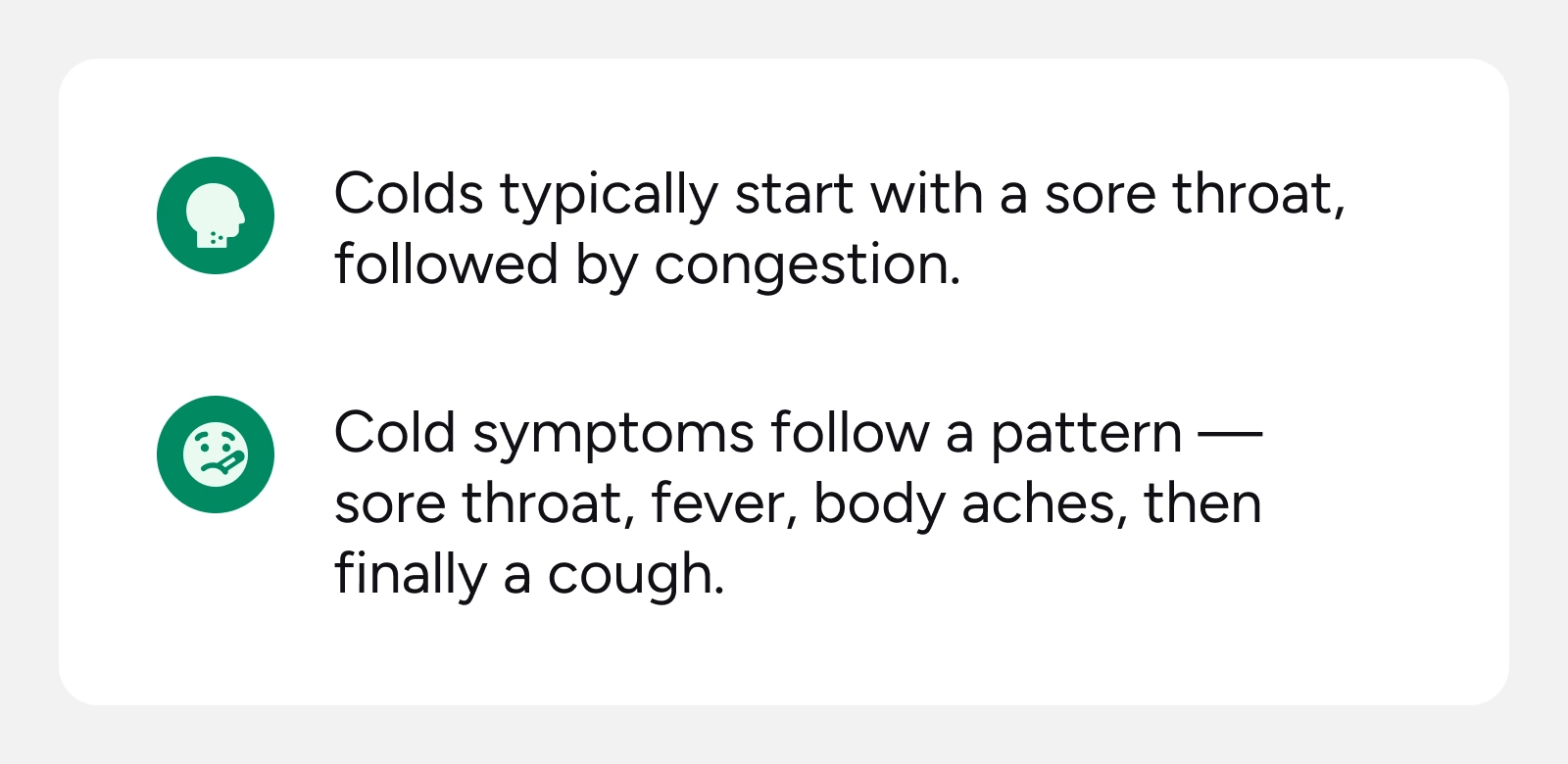
A common cold is caused by a viral infection and your immune system is actively fighting off a pathogen. While colds can happen at any time of year, spring often makes it harder to tell symptoms apart. As pollen levels rise and cold viruses continue to circulate, allergy and cold symptoms can look very similar. Paying attention to subtle differences can help you choose the right care.

Is it a cold or allergies? The key differences
Understanding the distinctions between seasonal allergies and common cold symptoms is easier when you compare them side by side. Here’s how you can tell allergies and a cold apart:
| Seasonal allergies | Common cold |
|---|---|
| Caused by an immune reaction to allergens (pollen, mold, dust) | Caused by a viral infection |
| Symptoms appear quickly after exposure to trigger | Symptoms develop gradually over 1–3 days |
| Lasts as long as you’re exposed to allergens (weeks to months) | Typically improves within 7–10 days |
| No fever | Low-grade fever possible |
| Itchy eyes are common and pronounced | Itchy eyes are rare or mild |
| Frequent sneezing, often in clusters | Occasional sneezing, usually at the start |
| Body aches are rare and mild | Body aches are common |
| Clear, watery nasal discharge | Nasal discharge may start clear, can become thicker and colored |
| Mild sore throat, can occur from post-nasal drip, mild | Painful sore throat is common, especially early on |
| Cough can develop from post-nasal drip or airway irritation | Cough is common and can include mucus |
| Not contagious | Highly contagious |

Symptom patterns to watch for
Common allergy patterns
Seasonal allergies announce themselves through a predictable pattern of symptoms that become easier to recognize once you know what to look for:
- They happen at the same time of year
The hallmark of allergies versus common cold symptoms is their timing. If you notice your symptoms appearing every spring when trees bloom, or every fall when ragweed peaks, you’re likely dealing with seasonal allergies. These symptoms tend to improve when you’re indoors or during rainy weather that clears pollen from the air. - They cause itching
Seasonal allergies and cold symptoms become most obvious in the intensity of itching. Allergies cause itching in your eyes, nose, throat, and even the roof of your mouth — a signature symptom that colds rarely produce. This itching causes the typical allergic sneeze: multiple sneezes in a row. - They are triggered by your environment
With allergies, your symptoms respond directly to your environment. You might feel fine indoors with closed windows but start sneezing within minutes of going outside. Or perhaps your symptoms worsen after yardwork, spending time in parks, or opening windows on breezy days. Unlike a cold, allergic symptoms intensify and lighten up based on your exposure to triggers, often lasting for weeks or months during allergy season.
Common cold patterns
Understanding common cold symptoms helps distinguish when you’re actually fighting a viral infection rather than reacting to environmental allergens. Watch out for:
- A gradual buildup of symptoms
Colds develop from viral exposure, often after someone near you has been sick. Unlike allergy symptoms, cold symptoms build gradually over one to three days after you’ve been infected. You might notice a scratchy throat first, followed by congestion, and then other symptoms emerging over the next day or two. - A fever and body aches
If you’re running above 100°F, you’re dealing with an infection, not allergies. Similarly, the muscle aches, fatigue, and general discomfort that make you want to crawl into bed are cold symptoms, not allergy symptoms. A cold makes your whole body feel sick. - Symptoms lasting 7–10 days
Colds follow a predictable pattern, with symptoms peaking around day three to five and then gradually improving. Most people feel significantly better within 7–10 days.

What would a doctor do?
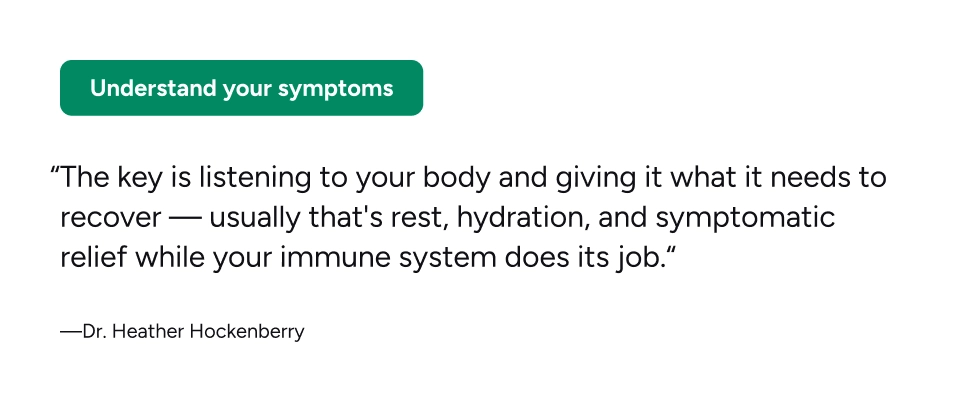
Tips from Dr. Heather Hockenberry
-
1.
Get plenty of rest
When I feel those first signs of a cold flaring up, rest becomes my top priority. Giving my body the energy it needs to heal is essential — and I actually stop exercising completely when I’m sick. Many patients tell me they want to ‘sweat it out,’ but that’s not how it works. Exercise robs your body of the energy it needs to fight infection. -
2.
Stay hydrated
I stay hydrated throughout the day, which helps thin out mucus and makes symptoms more manageable. For symptom relief, I use ibuprofen or acetaminophen — ibuprofen especially helps with sore throat at the beginning of a cold. -
3.
Get over-the-counter relief
I also use over-the-counter medications like guaifenesin (an expectorant) and decongestants when needed — though anyone with high blood pressure or heart conditions should check with their doctor before using decongestants. One tip that many people don’t know: keeping your bedroom cool actually helps reduce coughing at night. The warmer the room, the more you tend to cough.

When your symptoms may signal something more
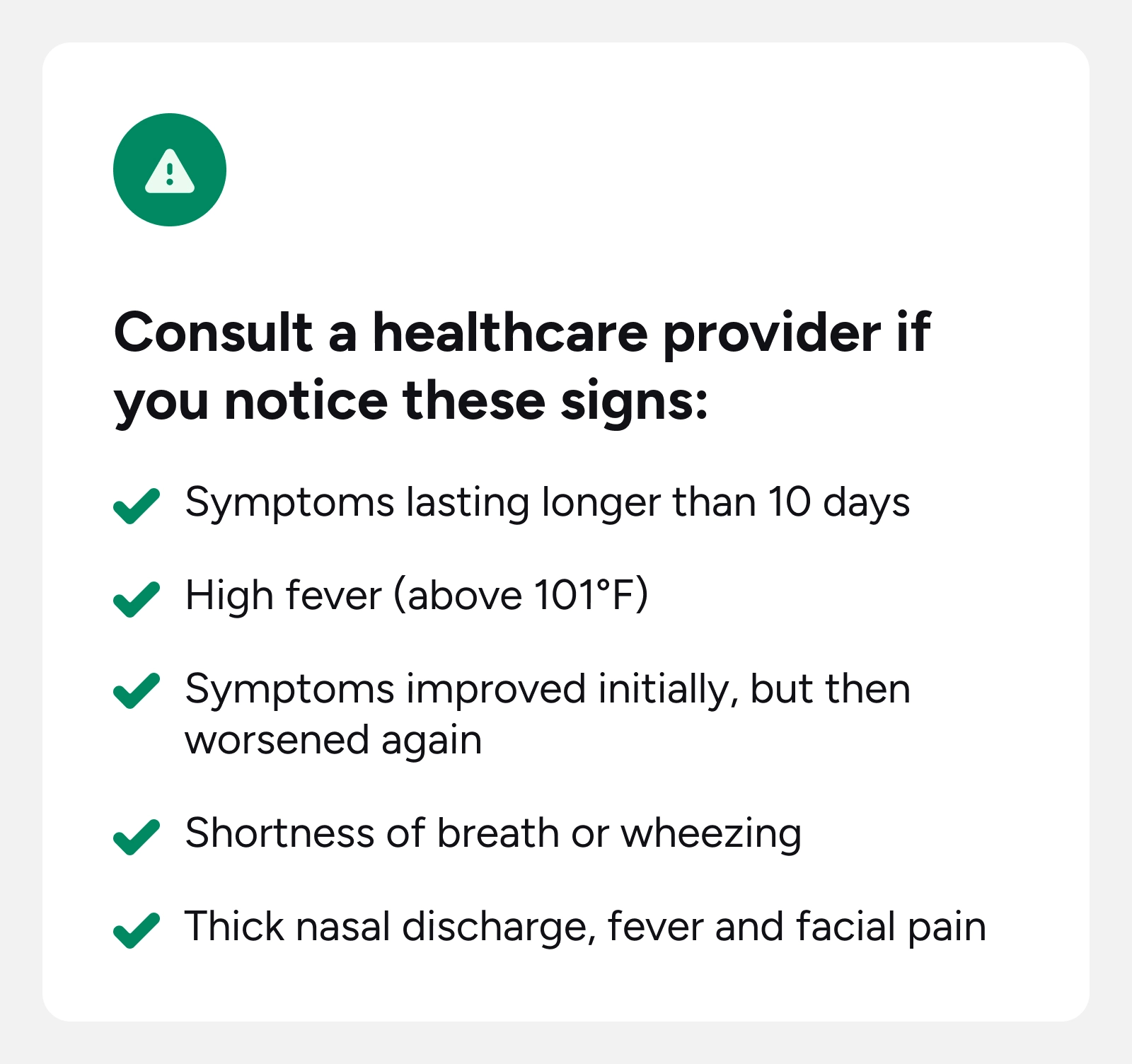
We’ve explored seasonal allergies versus common cold symptoms, but it’s important to recognize when your symptoms might indicate a condition that needs medical attention. The following signs can indicate a sinus infection, more severe respiratory infection, or complications that require professional evaluation.
Consult a healthcare provider if you notice these signs:
- Symptoms lasting longer than 10 days without improvement
- High fever (above 101°F) or fever that returns after initially breaking
- Severe sinus pain or pressure, especially if only on one side
- Shortness of breath or wheezing that limits your activities
- Thick nasal discharge accompanied by facial pain and fever
For a comprehensive symptom assessment, visit our Spring symptom check: Is it allergies or something more? checklist to determine your next best step.
Remember that paying attention to your body’s signals is an act of preventive care — much like monitoring your heart health or tracking other wellness patterns. Exploring how to improve your heart health, noticing symptoms early, and seeking appropriate care prevents small issues from becoming larger problems.

Getting help for your seasonal allergy symptoms
Once you’ve determined you’re experiencing seasonal allergies or cold symptoms, knowing your care options empowers you to find relief quickly.
- Start with over-the-counter options
For mild to moderate allergy symptoms, antihistamines can provide significant relief by blocking the histamine response that causes sneezing, itching, and runny nose. Nasal steroid sprays work differently by reducing inflammation and can be particularly effective for congestion. - Try a proactive approach
Many people find that minimizing exposure to triggers (keeping windows closed during high pollen days, showering after being outdoors), and using air purifiers creates meaningful symptom control. Learn more about comprehensive allergy management in our guide on How to control your seasonal allergies. - Seek professional care
If over-the-counter medications aren’t providing adequate relief, you’re unsure whether you’re dealing with allergies, or your symptoms interfere with your daily life, a quick visit can make a big difference. A Doctor On Demand® provider can evaluate your symptoms, confirm whether you’re experiencing allergies, recommend prescription-strength treatments if needed, and help develop a personalized management plan. - Book a virtual visit
Virtual care makes addressing seasonal allergies and cold symptoms more convenient than ever. Instead of wondering if it’s a cold or allergies while feeling miserable, or how to tell between allergies and a cold when symptoms overlap, you can connect with a provider from home.
For more guidance on when professional evaluation makes sense, read our article on When to see a doctor for allergies.
Taking informed next steps means you don’t have to navigate the confusion without help. Whether you need clarity on what you’re experiencing, require prescription medication for better symptom control, or just need peace of mind, understanding your symptoms is the first step.

Ready to feel better?
Book a visit with a Doctor On Demand® provider today. Get expert guidance on your allergies versus common cold symptoms and discover effective relief strategies designed for your specific needs.
About the authors

Dana Duran is a copywriter with over 15 years of experience writing and editing content for start-ups, wellness brands, and non-profits, including 10 years of writing, editing, and producing in the museum and cultural space. She currently lives and works in San Diego, CA.

Dr. Heather Hockenberry is board certified in family medicine. She earned her doctor of medicine degree at the University of Nevada Reno School of Medicine where she also completed her internship and residency in family medicine, serving as chief resident during her time there. As an urgent care physician for a decade prior to coming to Included Health, she treated acute illnesses and injuries of a diverse nature in a clinic setting. She came to Included Health in 2015 as a staff physician, and currently serves as an associate medical director supporting our clients from a clinical perspective.